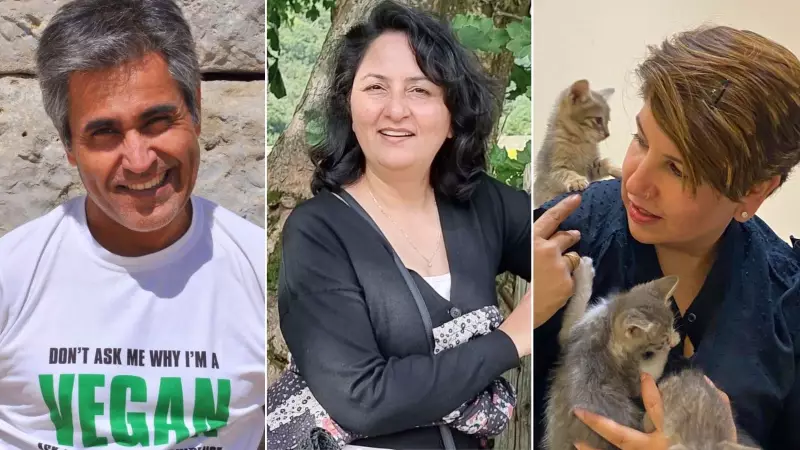
In an era where public gestures often seek the spotlight, a different kind of service is taking root in Chandigarh. It is driven not by noise, but by steady intent and quiet action. From the hallways of the Punjab and Haryana High Court to classrooms in Mohali and homes across the Tricity, individuals and collectives are addressing gaps in community living, environmental care, animal welfare, and mental health. Their work offers a powerful lesson: meaningful change often begins by tending to one's own space and letting the impact ripple outward.
Lawyers Cultivating Change from the Court Complex
The story of FEED Goal began with a shared sense of unease. When trees near the Punjab and Haryana High Court complex were cut down, many lawyers felt a loss but lacked a platform for collective response. This incident sparked the creation of the Forum for Environment and Enlightening Discussions (FEED Goal). Advocate Tanu Bedi, a key member, clarifies the group's philosophy: it is neither charity nor activism, but a fundamental responsibility.
Moving beyond mere discussion, FEED Goal translates conversation into concrete action. On World Environment Day, lawyers, judges, and court staff came together to clean the campus and plant saplings. Subsequent drives have added nearly 150 plants, with judges participating to set an example. The initiative has expanded to include thoughtful activities like film screenings on justice, distributing jute bags to curb plastic use, and organizing Green Commute Days. Members have even adopted and named plants on campus, ensuring one-day efforts blossom into sustained care.

Building Inclusive Communities and Protecting the Vulnerable
While laws enshrine rights, reality for many families with members needing mental health support is a struggle. Faced with a choice between unaffordable private care and unsuitable shelters, over 100 families in Chandigarh found solidarity in Citizens for Inclusive Living (CIL). This collective, which includes mental health professionals, educators, and social workers, anchored its mission on one pressing question: who will care for our children when we are gone?
Through seven years of persistent advocacy—including representations, campaigns, media outreach, and legal petitions—CIL achieved a landmark victory. Their efforts led to the establishment of Chandigarh's first government-supported group home for persons with mental health conditions. While the facility continues to evolve, advocates like Aditya Vikram, D R Paul, and Dr. Adarsh Kohli see it as a crucial first step, achieved through shared effort rather than individual credit.
This ethos of preventative care extends to the animal kingdom through Peedus People. Founded in 2016 by mechanical engineer Inder Sandhu, the organization focuses on stopping suffering before it starts. Their cornerstone Puppy Free Zone programme, now active in eight sectors of Chandigarh and parts of Mohali, uses focused sterilisation drives to break the cycle of abandonment.
Education is paramount. The team has reached nearly 350 schools and over two lakh children, teaching animal behaviour and rabies prevention. To date, they have facilitated around 4,000 vaccinations and 3,000 surgeries. Their advocacy also led to a significant policy win, making Chandigarh the first Indian city to mandate registration for horse-drawn carts, sharply reducing overloading and the use of illegal spike bits.
Nurturing Minds, From Classrooms to Therapy Sessions
In a modest building in Mohali's Phase 11, Bright Sparks School is redefining early education. For Rajdeep Kaur, who left a 19-year corporate career, the children's curiosity was a magnetic pull. Her involvement grew from teaching spoken English to shaping learning materials and outreach. She believes early education, done with care, can transform entire families. The school's support doesn't end at Class 5; it continues with fee assistance and guidance into higher classes, aiming to raise thoughtful citizens, not just academic performers.

This focus on holistic well-being finds a professional champion in Supreet Dhiman, a trained mental health professional. Through her initiative, Shaping Destiny, she works with individuals, colleges, and workplaces across the Tricity. Dhiman, who has delivered over 1,000 therapy sessions, challenges the notion that well-being is about constant happiness. Instead, she emphasizes slowing down, understanding emotions, and setting boundaries. She is also developing a year-long clinical training programme for psychology graduates, aligned with UK NHS protocols, to build local capacity.
Quiet Service in Everyday Life
The spirit of change also lives in individual homes. For Nidhi Anand, fostering animals was never a conscious decision but a natural extension of her life. Her home has become a refuge for cats and dogs, with support continuing long after adoption. Her quiet work has helped shift perceptions, making cat adoptions more common in the Tricity.
Meanwhile, the city's convenience economy runs on the tireless efforts of people like Vipin, an 18-year-old delivery worker. Juggling studies and supporting a family of seven, his days are measured in targets—often 60 orders long. His hope for fairer targets and safer conditions is a reminder of the human effort behind every delivery, underscoring the need for systemic recognition and better working conditions for gig economy workers.
Together, these diverse narratives from Chandigarh paint a compelling picture of civic responsibility. They demonstrate that impactful change doesn't always require grand campaigns. It can grow from weekly discussions among lawyers, a collective demand for inclusive housing, a preventative vaccine for a stray dog, a protected childhood in a classroom, or a safe space for a conversation about mental health. Their mission continues, one quiet step at a time.