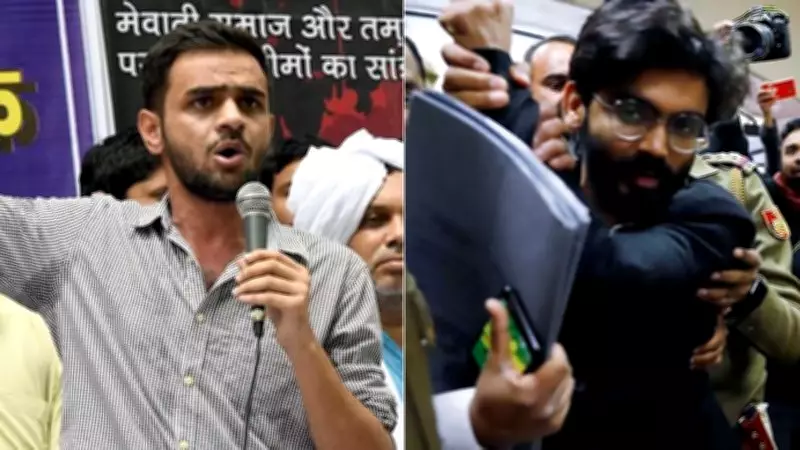
Activists Umar Khalid and Sharjeel Imam have moved fresh bail applications before a Delhi court in the larger conspiracy case related to the 2020 northeast Delhi riots. They contend that their continued incarceration without the commencement of trial violates their fundamental right to liberty.
Khalid's Argument: Change in Circumstances
Khalid's plea argues that even though his earlier bail application was rejected by the Supreme Court, subsequent judicial developments constitute a "change in circumstances." He referred to the court's remarks in May in another case, asserting that "bail is the rule..." even under the Unlawful Activities (Prevention) Act (UAPA).
Fresh Pleas Filed Before Additional Sessions Judge
The fresh pleas were filed before Additional Sessions Judge Sumedh Saini after the Supreme Court on January 5 refused them bail in the case registered under UAPA. The Delhi court has sought a response from the Delhi Police on both pleas and listed the matter for hearing on July 4.

Imam's Application: No Significant Development
In his application, Imam said there had been no "significant development" in the proceedings even six months after the Supreme Court judgment denying him bail, and that he had remained in custody for nearly six years. The plea said charges were yet to be framed in the case despite prolonged incarceration of the accused persons.
Imam's application argued that subsequent judgments of the Supreme Court, including in Syed Iftikhar Andrabi versus NIA and Tasleem Ahmed versus State (Govt of NCT of Delhi), had clarified the legal position regarding grant of bail in cases involving long incarceration under the UAPA. The plea further said Imam was not present in Delhi after the second week of January 2020 and was already in custody in another case before the riots broke out.
Khalid's Plea: Prolonged Incarceration and Delay in Trial
Similarly, Khalid, in his bail plea, has cited prolonged incarceration and delay in trial, submitting that he has spent nearly six years in custody without charges being framed. His application said the trial was unlikely to commence in the near future considering the large number of accused, witnesses, and documents relied upon by the prosecution.
The plea referred to the apex court's observations in its May 18 order in a terror-related case. While granting bail to the accused, a two-judge bench criticized the January 5 verdict and emphasized that anti-terror laws should not become a tool for indefinite detention. Khalid has argued that subsequent judicial developments constituted a "change in circumstances," making the present bail plea maintainable despite rejection of his earlier application by the apex court.
The application also cited various Supreme Court judgments on prolonged incarceration, including Union of India versus K A Najeeb and Vernon Gonsalves versus State of Maharashtra, to contend that statutory restrictions on bail under UAPA cannot override constitutional protections where trial is unlikely to conclude within a reasonable time.
Background of the Case
On January 5, the Supreme Court refused bail to Khalid and Imam in the larger conspiracy case while granting relief to co-accused Gulfisha Fatima, Meeran Haider, Shifa Ur Rehman, Mohammad Saleem Khan, and Shadab Ahmad. A bench of Justices Aravind Kumar and N V Anjaria then observed that there was a prima facie case against Khalid and Imam under the UAPA and held that all accused could not be treated equally in view of the "hierarchy of participation."
Khalid, Imam, and several others were booked under the anti-terror UAPA and provisions of the IPC for allegedly being part of a larger conspiracy behind the February 2020 riots in northeast Delhi. The violence erupted during protests against the Citizenship (Amendment) Act (CAA) and the proposed National Register of Citizens (NRC), leaving 53 people dead and over 700 injured.