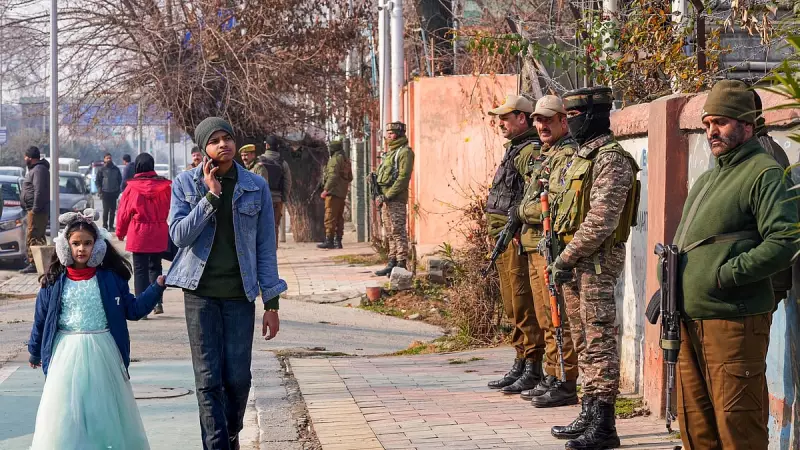
In the Kashmir Valley, a profound and unsettling silence is descending upon the public sphere. This is not the dramatic crackdown of shuttered printing presses or blocked websites, but a far more insidious and effective form of silencing. People are increasingly choosing not to speak to journalists, creating a quiet crisis for reporting and truth.
The Many Faces of Pressure in Kashmir
This withdrawal of public voice comes from multiple, converging directions. State institutions are often cited as a primary source of pressure, where individuals fear repercussions for sharing their views or experiences with the media. Alongside this, intense social pressures within communities discourage open dialogue, as people worry about being ostracized or labeled.
Perhaps the most chilling factor is the lingering fear of militant groups, whose presence and past actions continue to cast a long shadow over free expression. This combination creates an environment where self-censorship is not just a choice but a perceived necessity for safety and social harmony.

A Subtle Erosion of Truth
Journalist Zulfikar Majid, in his analysis dated 07 January 2026, highlights this troubling shift. When people stop talking, the very foundation of journalism crumbles. Reporters are left with official narratives and surface-level observations, unable to capture the nuanced, ground-level realities of life in the region.
This silence distorts the national understanding of Kashmir, making it difficult to gauge public sentiment, document grievances, or hold power to account. The crisis is quiet because its symptom is an absence—an absence of quotes, of personal stories, of the raw data of human experience that forms the core of credible news.
Consequences for Democracy and Dialogue
The long-term implications are severe for both Kashmir and Indian democracy. A functioning democracy relies on a free flow of information and a vibrant public discourse. When that flow is dammed by fear and pressure, it becomes impossible to address problems constructively or build genuine trust.
This environment fosters misinformation and allows rumors to flourish in the absence of verified, on-the-ground reporting. The crisis, therefore, extends beyond the media; it is a crisis for informed citizenship and peaceful conflict resolution.
Addressing Kashmir's quiet crisis requires recognizing the complex web of fears that enforce this silence. It calls for creating conditions where people feel secure enough to share their stories without dread of retribution from any quarter. Until then, the silence will speak volumes about the state of freedom and fear in the valley.