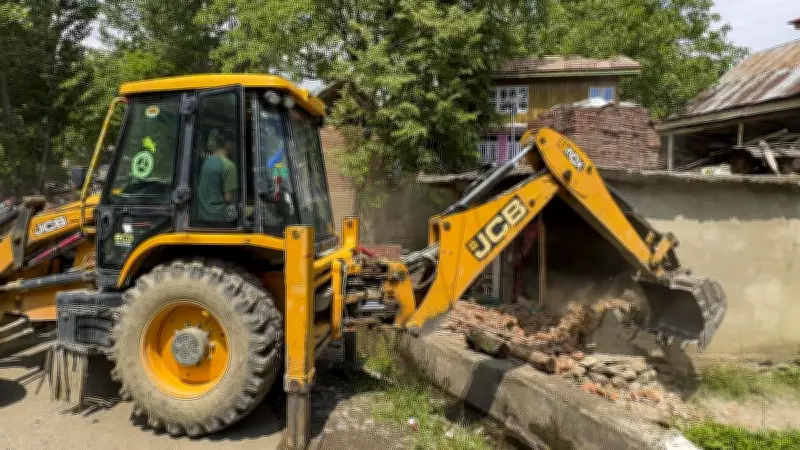
Anti-drug demolitions in Kashmir have sparked a heated debate over adherence to 'due process' as authorities intensify a campaign against properties allegedly funded by narcotics trafficking or constructed illegally on state land.
Campaign Intensifies
Officials say the drive targets structures that were raised through proceeds from the illegal drug trade or built without proper authorization on government-owned land. The crackdown is part of a broader effort to curb drug abuse and related criminal activities in the region.
According to local administration sources, dozens of buildings—including homes, shops, and guesthouses—have been razed in recent weeks across several districts of Jammu and Kashmir. The authorities claim that these actions are necessary to dismantle the financial network of drug peddlers and to reclaim public land.

Criticism Over Due Process
However, the campaign has drawn sharp criticism from human rights activists, legal experts, and opposition politicians who argue that the demolitions are being carried out without proper legal notice or opportunity for the affected parties to present their case. They contend that the process violates constitutional guarantees of property rights and natural justice.
“While the intention to fight drug trafficking is commendable, the manner in which these demolitions are being executed raises serious questions about due process,” said a local lawyer. “Many of these properties may have been built years ago, and the owners should be given a fair hearing before their homes are destroyed.”
Government Stand
The Jammu and Kashmir administration has defended the action, stating that all demolitions are conducted after thorough verification and in compliance with existing laws. A senior official said, “We are not targeting anyone arbitrarily. Each case is reviewed, and only those properties that are clearly linked to drug money or illegal encroachment are being demolished. Notices are served, and appeals can be made.”
The government also emphasized that the campaign is part of a zero-tolerance policy towards drug trafficking, which has become a major social concern in the region, especially among the youth.
Broader Implications
The debate over the demolitions also touches on larger issues of land rights, rehabilitation of affected families, and the effectiveness of punitive measures in tackling the drug menace. Critics argue that without addressing the root causes of drug abuse—such as unemployment, poverty, and lack of opportunities—the demolitions will only create hardship without solving the problem.
Meanwhile, some residents have expressed mixed feelings. “We support the fight against drugs, but the way these demolitions are happening is scary. People are losing their homes overnight,” said a Srinagar resident who wished to remain anonymous.
As the campaign continues, all eyes are on the courts, where several petitions have been filed challenging the legality of the demolitions. The Supreme Court has reportedly taken note of the matter and may issue guidelines to ensure that due process is followed.
The outcome of this legal scrutiny could set a precedent for how anti-drug operations are conducted in other parts of the country, balancing the need for enforcement with the protection of individual rights.