

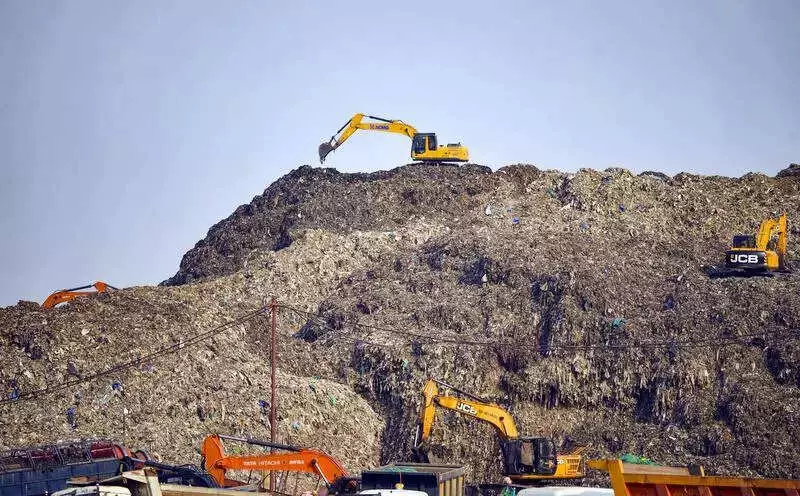
India's Massive Cleanup Drive: 214 Landfills Targeted for Remediation
The Indian government has launched an ambitious mission-mode program to fast-track the elimination of accumulated legacy waste from 214 major landfill sites across the country by October 2026. The initiative, announced on Saturday, represents one of the largest urban cleanup operations in India's history.
Housing and Urban Affairs Minister Manohar Lal Khattar formally launched the Dumpsite Remediation Accelerator Programme (DRAP) during the government's National Urban Conclave. The program specifically targets high-load locations that account for approximately 8.8 crore tonnes of waste, representing nearly 80% of India's remaining legacy waste problem.
National Scale of the Waste Challenge
These problematic waste sites are spread across 202 municipal areas throughout India, including major urban centers such as Delhi, Chennai, Greater Jaipur, Amritsar, Ludhiana, Aligarh, Kolkata, Karimnagar, Kottayam and Margao. The widespread distribution underscores the national scale of the legacy waste issue affecting urban environments across the country.

In a significant demonstration of commitment, Minister Khattar has personally adopted the Bhalswa landfill, one of Delhi's three major legacy waste dumpsites. He revealed to reporters that substantial progress has already been made, with approximately 4.8 lakh tonnes of waste neutralized at the site in just the past two-and-a-half months.
Ambitious Timeline and Land Recovery
The minister outlined an ambitious timeline for the Bhalswa site, stating that another 40 lakh tonnes will be cleared within the next year. This cleanup effort is expected to unlock nearly 70 acres of valuable urban land that has been occupied by waste for decades.
Khattar urged elected representatives and social leaders across the country to follow his example by adopting landfills in their respective areas. He emphasized the importance of tapping into various funding sources, including Corporate Social Responsibility (CSR) funds, private entities, and state agencies to meet the aggressive target of eliminating legacy dumpsites within the specified timeframe.
Officials explained that the program will prioritize larger landfills across the nation and operate on a comprehensive 5P framework encompassing political leadership, public finance, public advocacy, project management and partnerships. This multi-faceted approach aims to address the complex challenge from all necessary angles.
Implementation Strategy and Monitoring
Under DRAP, cities will be required to prepare detailed micro-action plans for each dumpsite, implement measures to prevent fresh dumping during and after remediation, and develop utilization plans for the reclaimed land. The progress of all remediation projects will be monitored in real-time through a dedicated DRAP portal, ensuring transparency and accountability.
The Ministry of Housing and Urban Affairs will provide both financial and technical assistance to municipal bodies undertaking these challenging cleanup operations. This support is crucial for many municipalities that lack the specialized expertise and resources required for large-scale waste remediation.
In a parallel development, the ministry also launched the Urban Investment Window (UWIN), a one-stop platform designed to attract private capital and long-term concessional funding from multilateral agencies such as the World Bank and Asian Development Bank for municipal infrastructure projects.
Anchored by the ministry's Public Sector Undertaking, HUDCO, this platform will also promote Public-Private-Partnership based urban projects to accelerate sustainable infrastructure development across Indian cities.

Housing and Urban Affairs Secretary Srinivas Katikithala described the conclave as reflecting a collective urban effort to make Indian cities more affordable, secure and sustainable. He noted that a new Team Urban is taking shape, fulfilling Prime Minister Narendra Modi's vision for steering urbanization in the country through coordinated action and shared responsibility.





