India's First National Spider Museum Vanishes in Bureaucratic Tangles
In a disheartening turn of events, India's inaugural national spider museum, established with much enthusiasm at the Forest Training Institute (FTI) in Chikhaldara, Amravati, has completely disappeared, entangled in bureaucratic inefficiencies. Launched in 2018 to promote tourism and advance spider research, the museum's hall has been repurposed into a classroom, and its rare preserved spider species are now missing, leaving experts and conservationists dismayed.
Museum's Disappearance and Missing Specimens
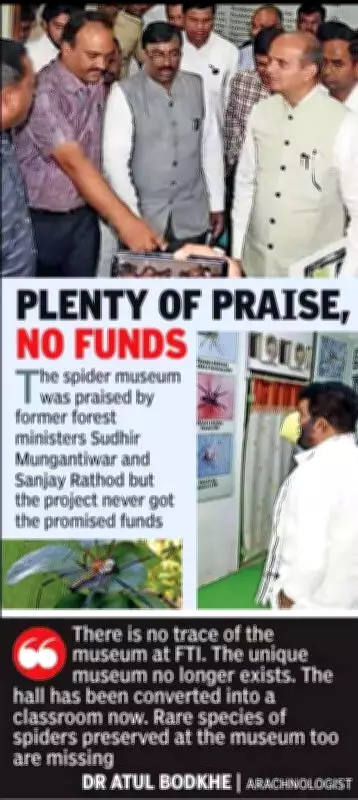
Arachnologist Dr. Atul Bodkhe revealed the shocking state of affairs, stating, "There is no trace of the museum at FTI. The unique museum no longer exists. The hall has been converted into a classroom now. Rare species of spiders preserved at the museum too are missing." This development marks a significant setback for arachnology in India, especially given the Melghat region's rich biodiversity, home to countless spider species that the museum aimed to study and showcase.
Initial Promise and Funding Issues
The museum was initiated by the late Prof. GN Wankhade, an esteemed arachnologist, with support from Prof. Kishore Rithe, head of the Bombay Natural History Society (BNHS). At its inception, then Maharashtra finance and forest minister Sudhir Mungantiwar praised the project and assured funding for a dedicated building. Dr. Bodkhe explained, "The state government had sanctioned around Rs37 crore for FTI infrastructure, with Rs3.5 crore reserved for the spider museum. However, the forest department did not pay attention to the museum building and spent the entire fund on developing FTI infrastructure."

Bureaucratic Neglect and Lack of Follow-Up
Prof. Rithe expressed regret over the museum's alleged dismantling, criticizing the forest department and involved agencies for their neglect. He emphasized, "It's very unfortunate to hear that the museum has been shut down. While setting up the museum, the forest department should have signed a MoU with a dedicated NGO or institute for manpower and technical expertise. They failed to take constant follow-up for the survival of the facility established. They ought to have gone to any step to ensure the long run of the museum." The project stalled during the COVID-19 pandemic, and without subsequent budget provisions, the proposal for a museum building failed to gain government approval.
Official Statements and Confusion
In 2024, the museum was officially removed from the FTI campus. Mukta Tekale, director of FTI Chikhaldara, stated, "Senior officials said that FTI doesn't have the specialization to run the museum. They directed us to shut down the museum. We handed over the preserved species and other material to Gugamal Wildlife Division. A classroom was set up at the hall where the museum was located." However, the Gugamal Wildlife Division's Deputy Conservator of Forests (DCF) contradicted this, claiming no knowledge of the spider species being transferred. She said, "I took charge six months ago and have not seen any preserved spider species kept in our custody," adding to the confusion and highlighting the bureaucratic disarray.
Impact on Research and Tourism
The disappearance of this museum represents a lost opportunity for scientific research and eco-tourism in Maharashtra. With Melghat's diverse spider population, the facility could have served as a hub for studies and public education. Its closure underscores broader challenges in maintaining specialized institutions without proper planning and sustained support from government bodies.
As the spider museum fades into memory, questions linger about accountability and the future of such initiatives in India's conservation landscape. The incident serves as a cautionary tale for similar projects, emphasizing the need for robust frameworks and dedicated oversight to prevent such valuable resources from vanishing into bureaucratic oblivion.