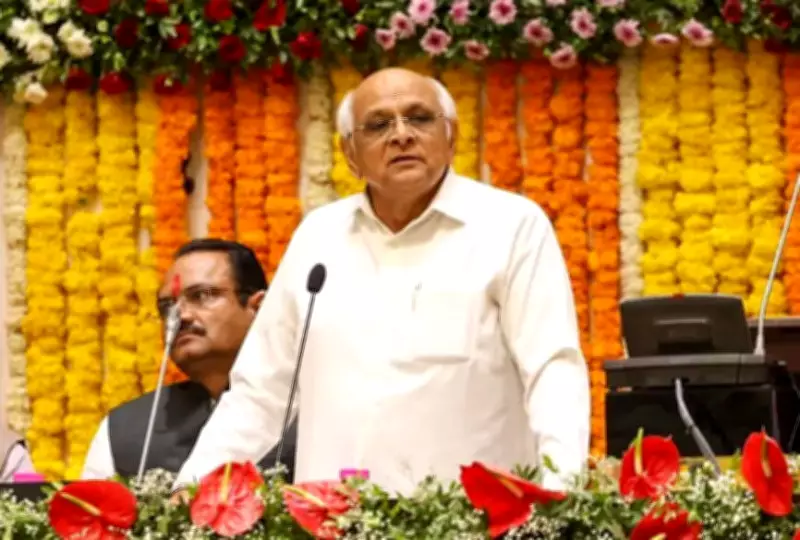
Chief Minister Bhupendra Patel has directed district administrations to ensure that public grievances received under the SWAGAT initiative are resolved fairly, transparently, and within the stipulated timeframe to reinforce public trust. He emphasized that rules-compliant tasks must be executed immediately, while non-permissible requests should be rejected with clear communication to prevent citizens from repeatedly visiting government offices.
SWAGAT Session Overview
The May 2026 State-Level SWAGAT session, rescheduled to Saturday due to a public holiday on Thursday, saw over 215 applicants at the Chief Minister's Office (CMO), while 4,020 representations across district and taluka levels were forwarded to respective departments for action.
Agricultural Grievances Addressed
Reviewing cases, the Chief Minister took a firm stance on agricultural grievances. Responding to complaints from farmers in Junagadh, Bhavnagar, and Gir Somnath regarding illegal encroachments on field access roads, Patel ordered district and police authorities to clear the obstructions and take strict action against anti-social elements. For farmers in Ahmedabad facing inaccessible 7/12 land records after resurvey, he instructed the collector to rectify resurvey errors and immediately generate the necessary extracts, noting that minor issues must be resolved locally.

Land Mutation and Property Issues
In Botad, the Chief Minister ordered a citizen-centric resolution for an agricultural land mutation error, ensuring that the applicant would not bear stamp duty costs caused by an administrative slip. In Vadodara, he directed that certified property copies held by applicants be accepted for verification if government records are missing. Additionally, he ordered an Aravalli municipality to expedite building permissions delayed by pending development plan approvals, reinforcing a commitment to pro-people governance.
Commitment to Timely Redressal
The Chief Minister reiterated that all departments must adhere to the principle of fair and timely grievance redressal. He stressed that eligible requests should be processed without delay, while ineligible ones must be clearly communicated to avoid confusion and repeated visits. This approach aims to strengthen public confidence in the administration and ensure that citizens receive justice without unnecessary hurdles.