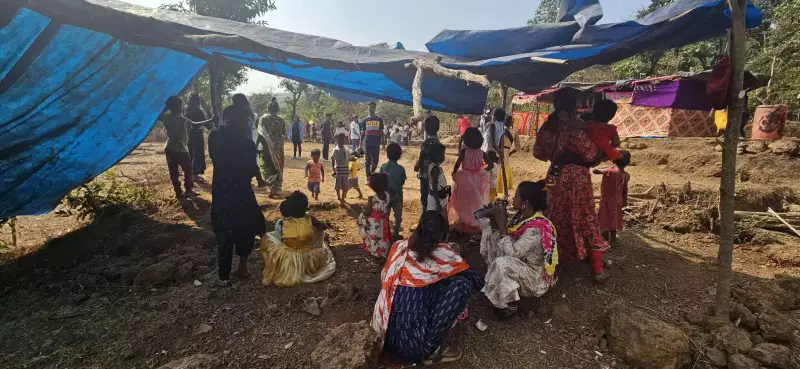
In the small settlement of Virnoda in North Goa, a simple act of blowing up a balloon for a game offered a fleeting glimpse of a lost childhood. For 22-year-old Ganesh Powar, a member of the Kathkari (or Wanarmare) tribal community, this moment during a recent sports and Christmas celebration was rare. His community, identified by the Centre as a Particularly Vulnerable Tribal Group (PVTG), remains locked in a daily struggle for basic rights and recognition in Goa.
A Childhood Interrupted, A Future Forged
Ganesh's story mirrors the transition of his entire community. He is part of the first generation to step away from a nomadic life. His parents, like many others, are without a marriage certificate despite having six children. Ganesh's own childhood was spent following his father in search of daily wage work. It was only at the age of 13, with the intervention of the NGO Human Touch Foundation, that he first entered a school and obtained crucial identity documents.
Today, Ganesh stands as a beacon of change. He is the first person in his community to have passed Class X and is currently studying for his Class XII examinations. Already a father to a one-year-old daughter, he is determined to break the cycle. "I want to make sure my daughter attends school at the age of 5," he asserts. Thanks to persistent efforts, all children in the Virnoda settlement of 71 people now attend school, a significant shift from the past.

The Fight for Official Recognition and Basic Dignity
However, the path to progress is fraught with systemic neglect. A major hurdle is the lack of official recognition. Despite being among the 75 PVTGs notified by the Central government, the Kathkari community in Goa has been left out of this list. "Maybe nobody told them," says Peter Borges, founder of Human Touch Foundation and a child rights advocate. This exclusion denies them access to specific welfare benefits and schemes designed for India's most vulnerable tribes.
Borges has been actively petitioning the state government, having written to the tribal welfare department and planning to meet the tribal affairs minister soon to rectify this oversight. The consequences of this invisibility are stark. The community in Virnoda lives in extreme poverty, residing in makeshift homes on private land they do not own. They lack pucca houses, defecate in the open, and survive on meagre daily wages, often facing exploitation.
Deep-Rooted Challenges: From Malnutrition to Child Marriage
The work of the foundation over the last eight years has addressed multiple crises. Initially, many children were severely malnourished. The NGO now ensures they have at least two eggs a day. A significant challenge has been obtaining basic documents like residence certificates, which are needed to register marriages—a process most adults have bypassed.
Another entrenched issue is child marriage. Finding 18-year-old girls with two or three children is common in the community. The NGO's intervention has been life-altering for some. Rupa Powar, now studying in Class IX, shares, "At least I was fortunate that the NGO came in in time for me and prevented my marriage in my teens. I will not have to marry until I am 18." She dreams of becoming a teacher.
Access to healthcare remains a distant luxury. Mangal Powar, who spent her childhood as a nomad, recounted giving birth to five of her six children in the open. Only her youngest was born in a hospital. Her hope now is fixed on the next generation: "I want to make sure all my grandchildren go to school now."
The story of Goa's Kathkari community is one of resilient hope amidst severe adversity. While individuals like Ganesh are charting a new course through education, the collective fight for official PVTG status, pucca homes, sanitation, and an end to child marriage continues. Their settlement in Virnoda stands as a testament to both the neglect faced by vulnerable tribes and their unwavering struggle for a dignified future.