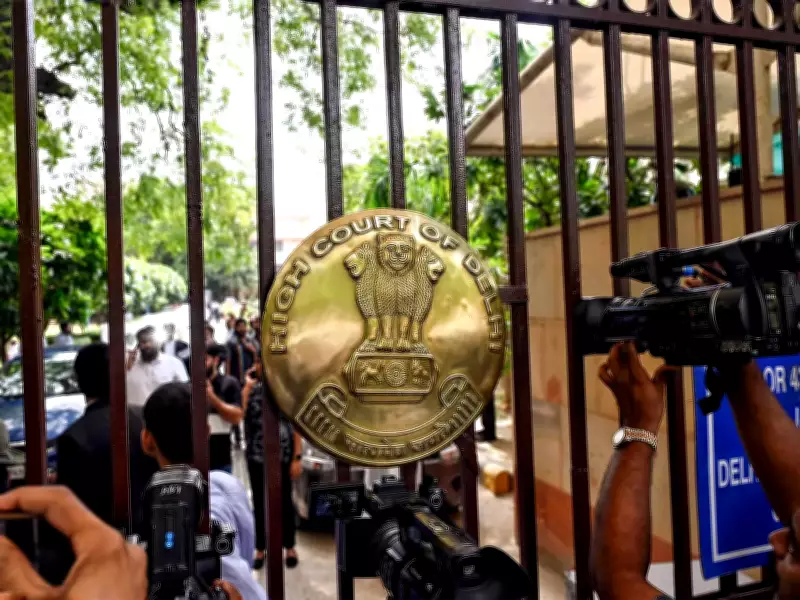
Delhi High Court Declares Medical Student Migration Ban Unconstitutional
The Delhi High Court has delivered a landmark judgment, striking down the prohibition on the transfer or migration of medical students from one college to another as invalid. In a significant ruling, the court has directed the National Medical Commission (NMC) to formulate a "proper policy" to permit such migrations, addressing long-standing concerns in medical education.
Court Terms Regulation "Unreasonable and Arbitrary"
A division bench comprising Chief Justice D K Upadhyaya and Justice Tejas Karia scrutinized Regulation 18 of the Graduate Medical Education Regulation, 2023. The bench unequivocally termed this regulation "unreasonable and arbitrary," asserting that it violates the Constitution of India. The court emphasized that a total prohibition on student migration cannot be justified under the guise of maintaining uniformity, standards, and integrity across medical institutions.
The bench articulated, "What we find is that in the name of maintaining uniformity, standard, and integrity in medical education across institutions, a total prohibition on transfer or migration of a student—which may be needed in various situations, including the one in this case—cannot be deemed reasonable. In our opinion, such prohibition is manifestly unreasonable and arbitrary." This statement was part of the court's order dated February 4, highlighting the judiciary's stance on educational flexibility.

Case Background: A Visually Impaired Student's Plea
The court was adjudicating a petition filed by a medical student with 40% visual impairment who sought migration from the Government Medical College in Barmer, Rajasthan, to a college in Delhi. The petitioner argued that their medical condition and capabilities were deteriorating due to the harsh climatic conditions in Barmer. The court recognized this as a legitimate concern, particularly under the Rights of Persons with Disabilities Act, which mandates public bodies to provide "reasonable accommodation" and an "appropriate environment" for persons with disabilities (PWDs).
The court criticized the NMC's stance, noting that the argument that the petitioner was aware of Barmer's weather before admission was "nothing short of rubbing salt into the wounds." It further observed that provisions enacted by Parliament, such as disability rights laws, cannot remain merely decorative literature on a bookshelf but must be actively implemented to ensure justice and equity.
Court Rejects NMC's Misuse Argument
The NMC had defended the prohibition by claiming that migration policies are prone to misuse. However, the bench rejected this argument, stating that the possibility of abuse cannot be used to deny legitimate rights to citizens. The court underscored that regulatory bodies must balance prevention of misuse with the protection of individual rights, especially in cases involving health and disability.
In its directive, the court ordered the NMC to make a decision on the petitioner's transfer request within three weeks. This timeline underscores the urgency of addressing such cases, particularly for students facing health-related challenges.
Implications for Medical Education and Disability Rights
This ruling has far-reaching implications for medical education in India. It challenges rigid regulatory frameworks and advocates for more humane and flexible policies that consider individual circumstances. Key points from the judgment include:

- Invalidation of Arbitrary Bans: The court's decision nullifies the blanket ban on student migration, paving the way for case-by-case evaluations.
- Policy Reform Mandate: The NMC is now compelled to develop a comprehensive migration policy that accommodates legitimate needs, including those of students with disabilities.
- Enhanced Disability Protections: The judgment reinforces the Rights of Persons with Disabilities Act, ensuring that educational institutions provide conducive environments for PWDs.
- Judicial Oversight: This case sets a precedent for judicial intervention in educational regulations deemed unconstitutional or unfair.
The Delhi High Court's ruling marks a pivotal moment in aligning medical education policies with constitutional principles and disability rights. It calls for a more empathetic and rational approach from regulatory bodies, ensuring that students' well-being is prioritized alongside academic standards.