

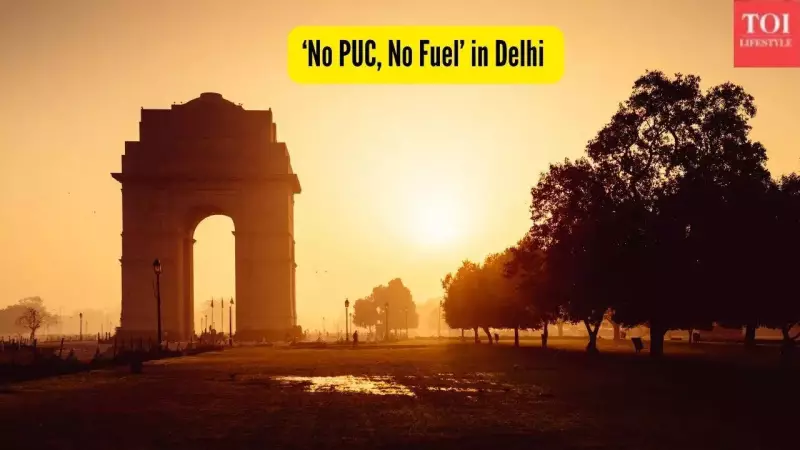
In a drastic move to tackle the capital's hazardous air quality, the Delhi government has put into effect a stringent "No PUC, No Fuel" policy starting Thursday, December 18. This regulation mandates that vehicles without a valid Pollution Under Control (PUC) certificate will be denied petrol, diesel, or CNG at all fuel stations across the city.
Emergency Measures Under GRAP Stage-IV
This decisive action is part of the Graded Response Action Plan Stage-IV (Severe+), activated by the Delhi government and the Commission for Air Quality Management (CAQM) to combat the severe health emergency posed by toxic smog. The policy is enforced under Section 5 of the Environment (Protection) Act, 1986 and will remain active as long as the 'Severe+' category persists.
The government has deployed a significant enforcement apparatus to ensure compliance. 580 police personnel and 37 specialised 'Prakhar' vans have been stationed at 126 checkpoints. Officials from the transport department are present at petrol pumps to oversee PUC checks. Technology is also being leveraged, with Automatic Number Plate Recognition (ANPR) cameras and the VAHAN database being used to verify vehicle compliance in real-time.

Wide-Ranging Vehicle Bans to Curb Emissions
Parallel to the fuel rule, a sweeping ban on polluting vehicles has been implemented. BS-III petrol and BS-IV diesel vehicles registered outside Delhi are completely barred from entering the capital. Only vehicles conforming to the latest BS-VI emission norms, along with CNG and electric vehicles, are permitted.
This restriction is expected to impact over 1.2 million non-BS-VI vehicles from neighbouring states like Haryana, Uttar Pradesh, and Rajasthan. Additionally, trucks carrying construction materials such as sand, gravel, and cement are banned from Delhi roads due to their high contribution to particulate matter. Violators face vehicle seizure and heavy penalties.
Which Vehicles Are Allowed?
The authorities have clarified that the following categories of vehicles are permitted to operate, provided they have valid registration and PUC certificates:
- BS-VI compliant petrol and diesel vehicles
- Electric Vehicles (EVs)
- CNG and LNG vehicles
- Emergency and essential services vehicles
- Public transport vehicles meeting emission norms
While acknowledging that these strict measures may cause disruptions to daily commuting and logistics, authorities emphasize their critical importance. The primary goal is to protect vulnerable populations, including children, the elderly, and individuals with respiratory conditions, from the debilitating effects of severe air pollution.






