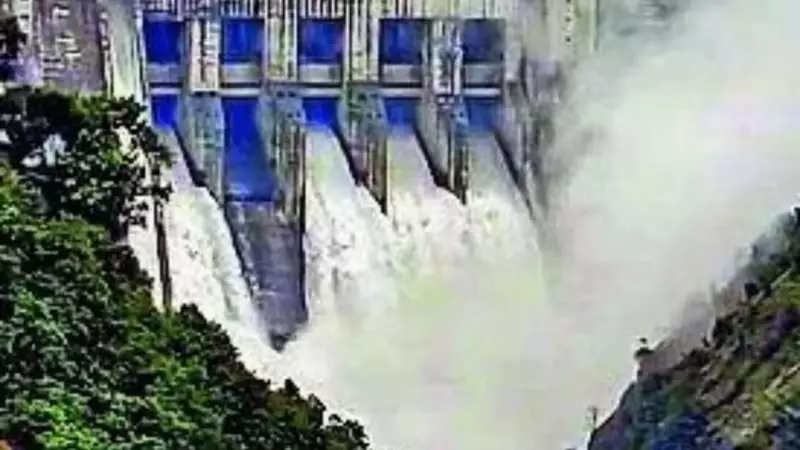
In a significant boost to India's renewable energy capacity, the Public Investment Board (PIB) granted its crucial approval on Thursday for the ambitious Rs 26,070-crore Kamala hydroelectric project in Arunachal Pradesh. This mega 1,720 MW project is poised to be a cornerstone in the nation's energy transition and its ambitious goal of achieving net-zero carbon emissions by the year 2070.
Project Details and Green Energy Impact
The Kamala Hydroelectric Project, which was earlier known as the Subansiri Middle HEP, is designed as a storage-based scheme. It is slated to be built on the Kamala River, spanning the districts of Kamle, Kra Daadi, and Kurung Kumey in Arunachal Pradesh. The project's core infrastructure will include the construction of a substantial 216-metre-high concrete gravity dam and an underground powerhouse.
According to sources, the plant is expected to churn out a massive 6,870 million units of clean, green energy every year. This substantial output will directly contribute to reducing the country's reliance on fossil fuels. The project has been scheduled for completion within a period of 96 months, or eight years, from the start of construction.

Financial Structure and Job Creation
The project will be executed on a build-own-operate-transfer (BOOT) model through a joint venture company. In this venture, the state-run NHPC will hold a majority 74% equity stake, while the Arunachal Pradesh government will hold the remaining 26%.
The total completion cost is pegged at Rs 26,069.5 crore. This will be financed with a standard debt-equity ratio of 70:30. The financial plan receives significant support from the Central government, which will provide grants of Rs 1,340 crore for enabling infrastructure and another Rs 4,744 crore specifically for the flood moderation component of the project. Additionally, the Arunachal Pradesh government has agreed to a 100% reimbursement of the state GST levied on the project.
"Considering these aspects, the levelised tariff of the project is estimated at Rs 5.97 per unit," a source revealed. The construction phase is expected to be a major employment generator, creating approximately 300 direct jobs and 2,500 contract jobs at its peak.
Beyond Power: Flood Moderation Benefits
A key and distinct feature of the Kamala project is its built-in flood moderation component. Beyond its primary function of electricity generation, the project is specifically envisaged to provide much-needed flood relief in the downstream Brahmaputra valley region. This dual-purpose design enhances the project's utility and positive impact on regional infrastructure and safety.
The PIB's approval marks a critical administrative milestone, clearing the path for one of the largest hydroelectric initiatives in the northeastern part of the country. It underscores the government's focused push to harness the Himalayan region's hydroelectric potential while addressing environmental and climate objectives.