Geopolitical Conflict Puts Global Sporting Calendar in Jeopardy
The escalating military confrontation between the United States and Iran, marked by Iranian attacks on US bases across several Gulf States, has created a significant security cloud over the international sports landscape. This volatile situation directly threatens the safe execution of several high-profile competitions, including the Bahrain and Saudi Arabian Grand Prix events in Formula 1 and the Finalissima football match scheduled between Spain and Argentina in Doha, Qatar.
2026 FIFA World Cup Faces Unprecedented Political Crisis
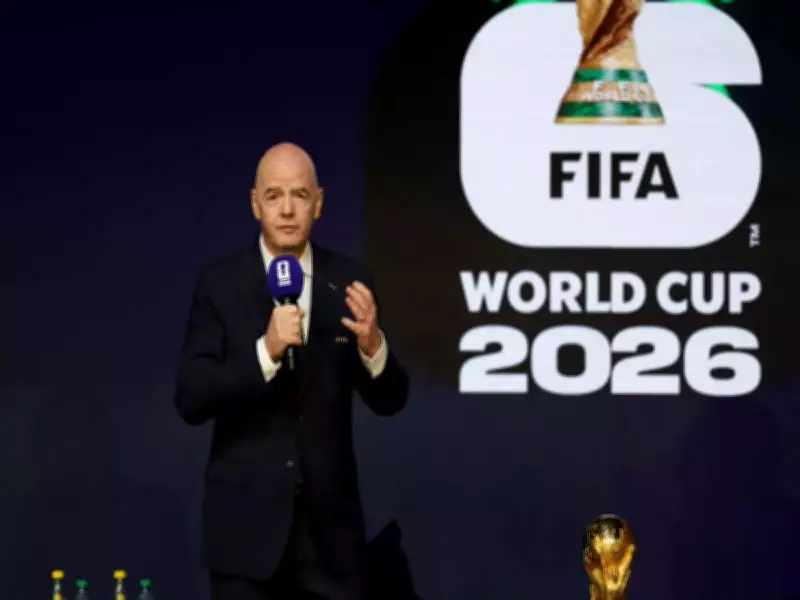
However, the most substantial and complex challenge emerges for the upcoming 2026 FIFA Football World Cup. With the tournament less than three months away and set to be hosted across Mexico, Canada, and the United States, the event was already navigating pre-existing controversies. These include concerns over cartel violence in Mexico, criticism regarding exorbitant ticket pricing, and diplomatic volatility in US relations with its co-hosts due to tariff disputes. The active warfare now plunges FIFA into an exceptionally precarious position, exacerbated by contentious rhetoric from American political leadership.
Former US President Donald Trump's statements have particularly complicated matters. While ostensibly welcoming Iran's participation, he simultaneously highlighted potential threats to the safety of Iranian players, casting serious doubt on their involvement. Iran, notably the first Asian nation to qualify for the 2026 tournament, had already publicly signaled its intent to withdraw following the US assassination of its leader, Ayatollah Ali Khamenei. Such a withdrawal would be a historic first in modern football, drawing parallels to the Bangladesh cricket team's security-related pullout from a recent T20 World Cup—a move that sparked intense scrutiny from the International Cricket Council.

FIFA's Regulatory Dilemma and Potential Sanctions
As the governing body, FIFA bears the ultimate responsibility for ensuring a secure environment for the World Cup, supported by local law enforcement. Should FIFA certify the venues as safe and Iran still opts to withdraw, the federation's bylaws authorize severe penalties. These sanctions could include imposing substantial fines—at least 250,000 Swiss Francs if withdrawal occurs over 30 days before the tournament, or a minimum of 500,000 Swiss Francs if within 30 days of the start date, as per Article 6.2 of the FIFA World Cup regulations. Furthermore, FIFA statutes mandate that member associations participate in all competitions for which they qualify; non-compliance could result in a ban from future FIFA events.
The situation presents a profound irony when contrasted with FIFA's handling of the Russia-Ukraine conflict. In 2022, FIFA banned Russian teams, citing unacceptable safety and security risks even at neutral venues—a decision later upheld by the Court of Arbitration for Sport. In the current scenario, the United States, as a host nation involved in military action, places FIFA in a contradictory bind, challenging its principles of neutrality.
Legal Avenues and Contingency Planning
FIFA regulations do provide some flexibility. Article 6.5 permits member associations to withdraw due to force majeure, though the interpretation of such circumstances depends on the context at the time of withdrawal. A potential middle-ground solution lies in Article 6.9, which allows FIFA to relocate matches for any reason, including force majeure. FIFA could theoretically schedule all of Iran's group-stage matches outside the United States and develop a contingency plan should Iran advance to the final, slated for New Jersey. This approach mirrors the contingency planning considered by the ICC during the T20 World Cup regarding Pakistan's potential qualification.

Broader Implications for International Sports Governance
Any decisive action by FIFA will carry significant political ramifications, potentially influencing Iran's participation in future events like the 2028 Los Angeles Olympics, where football is an Olympic sport. This crisis underscores a growing trend where sports, historically a tool for unity, are increasingly entangled in geopolitical conflicts. International federations, despite charters demanding neutrality, frequently find themselves embroiled in controversy. The current predicament highlights an urgent need for clearer, more robust directives to uphold fairness and integrity in global sports amidst an unstable world order.
The decisions made in the coming weeks will not only shape the 2026 World Cup but also set a critical precedent for how sporting bodies navigate the complex intersection of international politics and athletic competition.