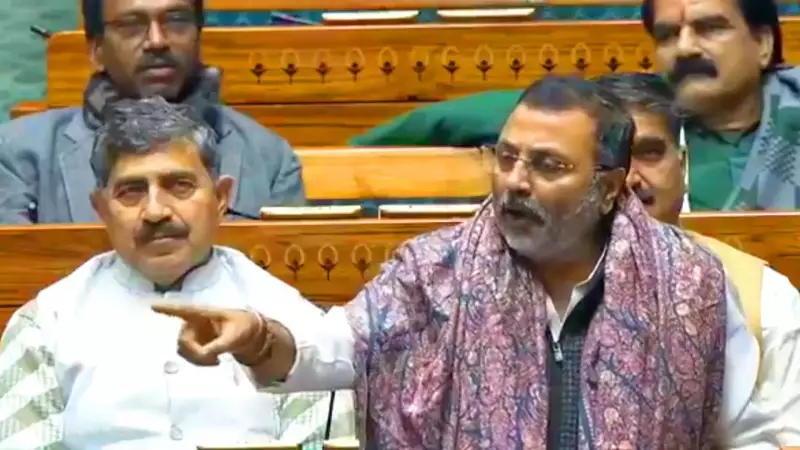
Tempers reached a boiling point in Parliament on Wednesday, December 18, 2025, as a heated debate turned into a full-blown confrontation. The session witnessed a major uproar following a provocative speech by Bharatiya Janata Party (BJP) Member of Parliament Nishikant Dubey.
Fiery Accusations Over Gandhi's Legacy
During the debate on the VB-G Ram G Bill, Dubey launched a direct and scathing attack on the principal opposition party, the Indian National Congress. The core of his argument centered on the Congress's historical and contemporary use of Mahatma Gandhi's name and legacy. Dubey accused the party of engaging in symbolic politics and hypocrisy.
In a statement that ignited the House, the BJP MP declared that Gandhi had been "killed repeatedly" by decisions taken during the Partition of India and in the years that followed. He linked this historical critique to allegations of corruption and political opportunism, suggesting the Congress weaponizes Gandhi's memory for electoral gain while betraying his ideals.

Chaos Erupts in the House
The sharp and personal nature of the accusations immediately triggered pandemonium. Opposition MPs protested vehemently, leading to a chaotic scene with raised voices and heated exchanges. Proceedings were disrupted as the Speaker attempted to restore order. This incident highlighted the deep political and ideological fault lines that currently define India's parliamentary discourse, especially with crucial legislative battles on the horizon.
The confrontation was not merely a war of words over a bill but reflected a larger, ongoing battle over the interpretation of history, nationalism, and political accountability. Once again, the legacy of Mahatma Gandhi became a central flashpoint on the floor of the Lok Sabha.
Broader Implications of the Clash
This episode underscores how historical narratives remain potent political tools in India. By directly challenging the Congress's claim to Gandhi's legacy, Dubey's speech aims to redefine the ideological space ahead of future political contests. The uproar it caused demonstrates the sensitivity of the issue and the readiness of both sides for a fierce ideological war.
The event on December 18th serves as a stark reminder of the volatile nature of parliamentary debates when they touch upon foundational figures and historical events. It sets a tense stage for further discussions on governance and history in the coming sessions.