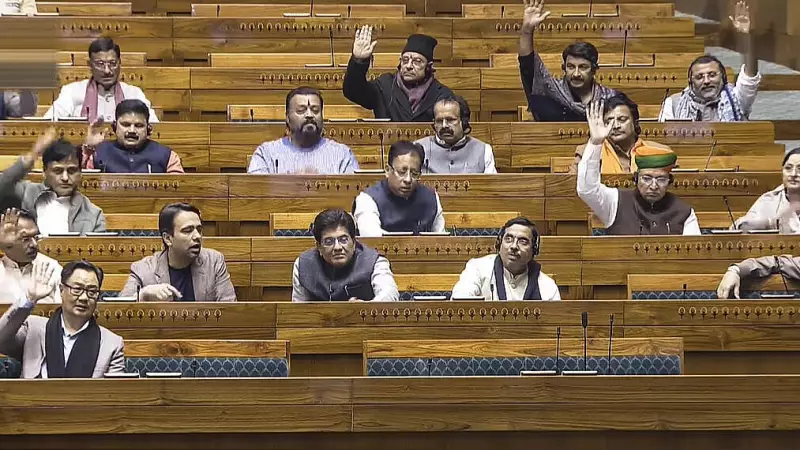
The Lok Sabha concluded a fiery discussion and passed the contentious Government of National Capital Territory of Delhi (Amendment) Bill, 2023, on Thursday. The bill, which effectively replaces an ordinance concerning the control of services in the national capital, was approved by a voice vote after hours of intense debate between the treasury and opposition benches.
Key Provisions and Contentious Debate
The legislation, officially titled the Government of National Capital Territory of Delhi (Amendment) Bill, 2023, establishes a National Capital Civil Service Authority. This authority will handle the transfer and disciplinary proceedings concerning Group 'A' officers and DANICS officers serving in the Delhi government. The authority will consist of the Delhi Chief Minister, the Chief Secretary, and the Principal Home Secretary of Delhi. However, in decisions where the authority's members hold differing opinions, the final view of the Lieutenant Governor will prevail.
Union Home Minister Amit Shah, who piloted the bill, strongly defended it in the House. He argued that the bill is constitutionally valid and does not violate the Supreme Court's judgment from May 11, which had granted the Delhi government control over services excluding police, public order, and land. Shah stated that Parliament possesses the full legislative power to enact laws for the Union Territory of Delhi. "The bill aims to ensure corruption-free administration and protect the rights of citizens," Shah asserted, framing it as a measure for effective governance.

Opposition's Fierce Resistance
The opposition, led by the Congress and other INDIA bloc parties, launched a scathing attack on the legislation. They condemned it as an unconstitutional overreach that undermines the Supreme Court's verdict and the democratic mandate of the elected Delhi government. Members argued that the bill strips the elected government of its essential administrative powers, rendering the Chief Minister a mere figurehead.
Congress leader Adhir Ranjan Chowdhury criticized the government for "trampling upon the federal structure" of the country. Other opposition members echoed this sentiment, labeling the bill a direct assault on the spirit of cooperative federalism. They contended that the creation of the authority, where the elected Chief Minister could be overruled by bureaucrats and the LG, was fundamentally undemocratic.
Government's Rebuttal and Final Passage
In his detailed rebuttal, Home Minister Amit Shah dismissed the opposition's claims as politically motivated. He emphasized that Delhi, being the national capital and a Union Territory, holds a unique position. Shah questioned the opposition's sudden concern for federalism, reminding the House of instances where central governments in the past had dismissed state governments.
The discussion lasted for over four hours before the bill was put to vote. Despite the opposition's demand for a division of votes, the bill was passed by a voice vote. The legislation will now be presented in the Rajya Sabha, where the government's numbers are not as strong, setting the stage for another potential showdown.
The passage of this bill marks a significant development in the ongoing tussle between the Centre and the Delhi government over administrative control. Its fate in the Upper House and the subsequent legal and political ramifications will be closely watched.