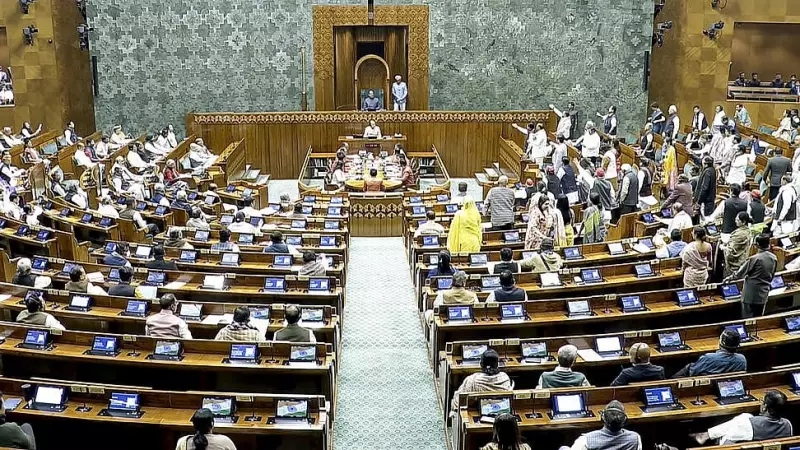
The Winter Session of Parliament commenced with significant action and disruption on Monday, as the government introduced three crucial bills in the Lok Sabha. This legislative push occurred amidst loud protests from opposition members, who raised slogans and demanded a statement from Home Minister Amit Shah regarding a recent security breach incident.
Legislative Business Amidst Political Unrest
The session, which began on December 4 and will conclude on December 22, saw the introduction of the following bills by Union Ministers. The first was The Post Office Bill, 2023, introduced by Communications Minister Ashwini Vaishnaw. This bill seeks to replace the colonial-era Indian Post Office Act of 1898 and aims to modernize the regulatory framework for post office services to harness their potential for banking and financial services delivery.
Secondly, Minister of State for Home Affairs, Nityanand Rai, presented The Jammu and Kashmir Reorganisation (Amendment) Bill, 2023. This legislation proposes to increase the total number of seats in the Jammu and Kashmir Legislative Assembly from 107 to 114. Notably, it reserves nine seats for members of the Scheduled Tribes community, a significant move for representation in the Union Territory.

The third bill, The Central Universities (Amendment) Bill, 2023, was introduced by Education Minister Dharmendra Pradhan. This bill focuses on the establishment of a new central university in the state of Tripura, named Sindhu Central University.
Opposition's Persistent Protests
The introduction of these bills was not a smooth affair. The proceedings were consistently interrupted by opposition MPs from the Congress and other INDIA bloc parties. Their primary demand was for Home Minister Amit Shah to address the house regarding the major security breach that occurred on December 13, the anniversary of the 2001 Parliament attack.
Despite the protests, Speaker Om Birla allowed the ministers to introduce the bills. The opposition members, however, continued their protest from the well of the house, holding placards and shouting slogans. This created a charged atmosphere where parliamentary business was conducted against a backdrop of persistent dissent.
Implications and the Road Ahead
The introduction of these three bills marks a proactive start to the government's legislative agenda in the Winter Session. The Post Office Bill reflects a push towards digitization and financial inclusion through India's vast postal network. The Jammu and Kashmir amendment is a politically sensitive move that alters the demographic representation in the assembly, a step that will be closely watched.
However, the session's tone has been set by the opposition's unwavering protest over the security issue. This indicates that the government may face continued hurdles in passing legislation unless a resolution or discussion on the security breach is facilitated. The coming days will reveal whether the house can transition from protest to productive debate on these and other important national issues.
The Winter Session, with its 15 sittings scheduled until December 22, promises to be a tense and eventful period in Indian parliamentary democracy, balancing legislative progress with robust political accountability.