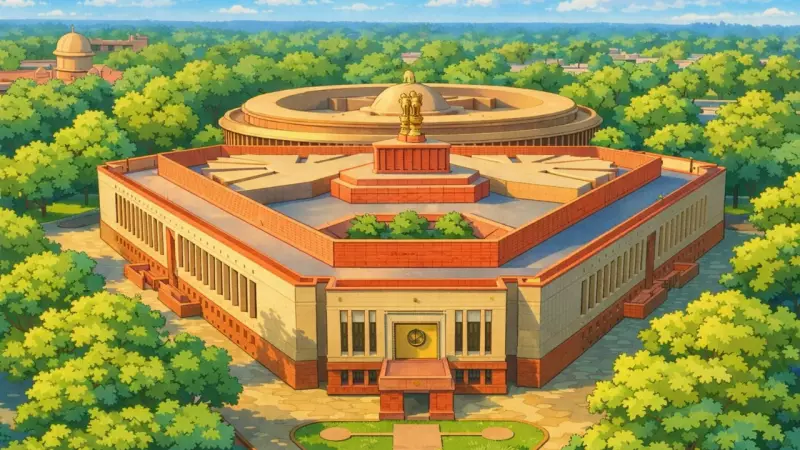
As India steps into 2026, the Parliament carries forward a substantial legislative agenda from a transformative yet contentious 2025. The upcoming Budget Session is poised to move from deliberation to decisive action, setting the governing blueprint for the vision of a "Viksit Bharat." The session will focus on implementing solutions across critical sectors like higher education, capital markets, and electoral processes, with several high-profile bills deferred from the Winter Session now awaiting their fate.
Major Bills Deferred to 2026: The Unfinished Agenda
While the Winter Session of 2025 saw the passage of significant reforms, several landmark bills faced procedural hurdles. They were either referred to parliamentary committees or held back for refinement, effectively shifting the legislative battleground to the Budget Session of 2026.
Securities Markets Code Bill, 2025
Hailed as a "constitutional moment" for India's financial markets, this bill aims to consolidate three major laws: the SEBI Act (1992), the Depositories Act (1996), and the Securities Contracts (Regulation) Act (1956). Given its potential impact on trillions of rupees in market wealth, it was referred to the Standing Committee on Finance in late 2025 for scrutiny. Critics fear it grants excessive power to SEBI, while the government argues unified regulation is essential to reduce overlap and confusion in a rapidly expanding market.

One Nation, One Election (ONOE)
The ambitious proposal to hold simultaneous elections for the Lok Sabha and State Assemblies was initiated via the Constitution 129th Amendment Bill in late 2024. Although it passed the Lok Sabha, it lacked the special majority required for a constitutional amendment. The related bills were subsequently sent to a 39-member Joint Parliamentary Committee (JPC), which now has an extension to submit its report by the last week of the Budget Session 2026. The opposition has vehemently opposed it, calling it an assault on federalism and regional autonomy.
Viksit Bharat Shiksha Adhishthan Bill, 2025
Introduced on December 15, 2025, this bill is central to the government's higher education overhaul. It proposes replacing regulators like the UGC, AICTE, and NCTE with a single umbrella body called the Viksit Bharat Shiksha Adhishthan (VBSA). Currently with a JPC, its report is expected by the end of the first part of the Budget Session. Proponents say it will streamline regulation, but critics argue it centralizes power and could undermine university independence.
Insolvency and Bankruptcy Code (IBC) Amendment Bill, 2025
This bill seeks to fine-tune India's corporate bankruptcy framework to enable faster resolution and introduce a "Cross-Border Insolvency" mechanism. However, critics point to low recovery rates for banks and systemic issues like vacancies in the National Company Law Tribunal (NCLT), arguing that legislative changes alone cannot fix capacity gaps.
Bills That Passed: A Session of Overhaul
The 2025 session was marked by significant legislative renovation across sectors:
VB–G RAM G Bill, 2025: This law replaces MGNREGA, increasing guaranteed workdays from 100 to 125 annually but shifting to a fixed, state-wise allocation model. Its passage on December 18, 2025, via voice vote was controversial, with critics warning it weakens the demand-driven safety net.
SHANTI Bill, 2025: Replacing the Atomic Energy Act (1962), this law opens nuclear power generation to private and foreign players and grants statutory status to the Atomic Energy Regulatory Board. It was passed by voice vote amid opposition walkouts over liability concerns.
Sabka Bima Sabki Raksha Bill: Passed on December 16, 2025, this bill raises the FDI limit in insurance to 100%, aiming for universal coverage by 2047.
Labour Codes: Operational from November 2025, these four codes consolidate 29 laws, modernizing labor regulations but facing criticism from trade unions for being employer-friendly.

Spoken But Not Concluded: Lingering Debates
Several critical issues saw intense debate but no resolution. These include the Special Intensive Revision (SIR) of electoral rolls, accused by the opposition of selective voter deletion; the ongoing Manipur crisis, which saw no dedicated parliamentary discussion; and air pollution, acknowledged as a health emergency but lacking a legislative framework.
As Parliament reconvenes, the session will test the government's ability to build consensus on deferred reforms while managing the implementation of already-passed laws. The outcome will significantly shape India's economic, educational, and political landscape in the coming years.