Vijay's victory in Tamil Nadu is easy to interpret as the rise of another film star in a state in which cinematic acclaim and political success are enmeshed. It may, however, mark a more consequential shift to a post-Dravidian phase in Tamil politics. Post-Dravidian does not mean anti-Dravidian. It means that welfarism, social justice, and Tamil pride are now being detached from the duopoly of the Dravidian parties over nearly six decades.
The Numbers Reveal the Scale of the Disruption
Vijay's Tamilaga Vettri Kazhagam won 108 seats in the 234-member assembly, ahead of DMK's 59 and ADMK's 47. TVK, short of a majority, is reportedly reaching out to Congress (5) and PMK (4) for support. Nonetheless, TVK has already done something remarkable by breaking the longstanding view in Tamil politics that voters have no choice except DMK or ADMK.
What Does Post-Dravidian Mean?
The term post-Dravidian does not imply an end to Dravidian ideology. Instead, it suggests that the core tenets of Dravidian politics—social justice, welfare schemes, and linguistic pride—are no longer the exclusive domain of the two dominant parties. Vijay's campaign successfully appropriated these themes, offering a fresh face while maintaining continuity with popular aspirations.

This shift has been brewing for years. The DMK and ADMK have faced allegations of corruption, dynastic politics, and internal factionalism. Voters, especially the youth, have grown weary of the same choices. Vijay, leveraging his mass appeal and a well-organized ground campaign, tapped into this discontent.
Critics argue that Vijay's victory is merely a celebrity-driven phenomenon, similar to M.G. Ramachandran and J. Jayalalithaa before him. However, unlike his predecessors, Vijay did not belong to either Dravidian party. He built his own party from scratch, which is a testament to the waning loyalty to traditional party labels.
Challenges Ahead for TVK
Despite the historic win, TVK faces significant hurdles. Forming a stable government will require coalition management, a skill Vijay's party has yet to demonstrate. Moreover, the opposition from DMK and ADMK, which together hold over 100 seats, will be fierce. The real test will be governance. Can TVK deliver on its promises of transparency, development, and social justice without the institutional experience of its rivals?
Furthermore, the national implications are noteworthy. A non-Dravidian party in power in Tamil Nadu could alter the state's relationship with the central government, especially on issues like language policy and federalism. Vijay's stance on national issues remains ambiguous, but his victory signals a potential realignment in southern politics.
Conclusion: A New Chapter for Tamil Nadu
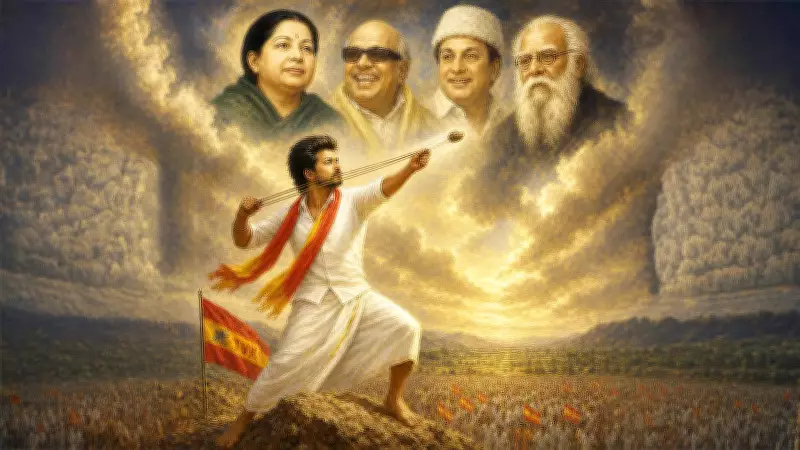
Whether Dravidian parties can reinvent themselves or whether TVK's rise is a fleeting trend remains to be seen. What is clear is that Tamil Nadu's political landscape has been irrevocably changed. The Goliath of Dravidian politics has been wounded, and the sling of popular discontent, wielded by a film star, has struck a decisive blow. The post-Dravidian era has begun.