Why the West Bengal Election Remains a Political Enigma
The upcoming West Bengal assembly election is shaping up to be one of the most unpredictable political contests in recent Indian history. Analysts and pollsters are struggling to forecast the outcome, with several complex factors creating a volatile electoral landscape. This uncertainty stems from deep-seated political dynamics that are reshaping voter behavior and party strategies across the state.
Intense Political Polarization and Shifting Alliances
One of the primary reasons this election is so hard to call is the unprecedented level of political polarization. The traditional bipolar contest between the Trinamool Congress (TMC) and the Left Front has been fundamentally altered by the Bharatiya Janata Party's (BJP) aggressive entry into Bengal politics. This has created a three-way fight that is fragmenting the electorate in unpredictable ways.
Voter allegiances are shifting dramatically, with traditional support bases being challenged by new political narratives. The BJP's concerted effort to expand its footprint in eastern India has particularly complicated the electoral calculus, making it difficult to gauge which way the political winds are blowing.

Changing Voter Demographics and Aspirations
The demographic composition of West Bengal's electorate has evolved significantly in recent years. Younger voters, who constitute a substantial portion of the voting population, are demonstrating different priorities and political inclinations compared to older generations. Their concerns about employment, development, and governance are influencing electoral dynamics in ways that traditional polling models struggle to capture.
Additionally, the aspirations of various social and economic groups are creating new voting patterns. The traditional rural-urban divide in political preferences is becoming less pronounced as issues like infrastructure development, agricultural policies, and social welfare programs cut across geographical boundaries.
Strategic Campaigning and Communication Challenges
The election campaign itself presents unique challenges for prediction. All major parties are employing sophisticated communication strategies that combine traditional grassroots mobilization with digital outreach. This multi-pronged approach makes it difficult to measure the true impact of campaign messaging on voter sentiment.
Furthermore, the COVID-19 pandemic has altered conventional campaigning methods, forcing parties to rely more heavily on virtual interactions and media narratives. This shift has created an information environment where traditional indicators of electoral momentum—such as rally sizes and door-to-door canvassing—are less reliable predictors of actual voting behavior.
The Leadership Factor and Anti-Incumbency Dynamics
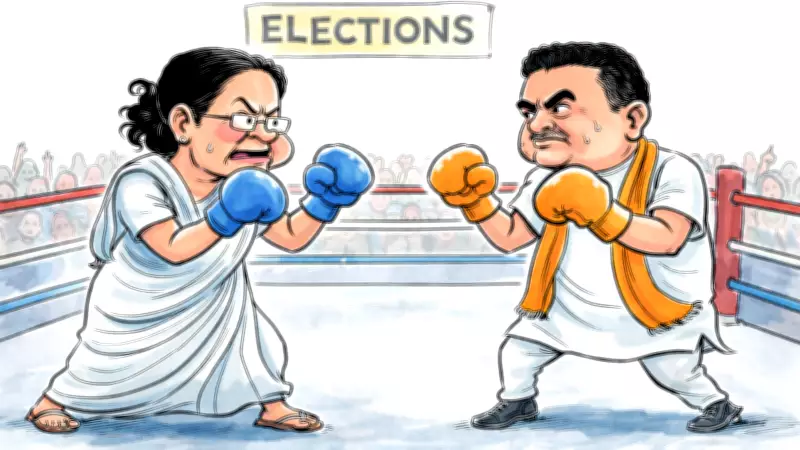
Chief Minister Mamata Banerjee's personal popularity remains a significant variable in this election. While she continues to command substantial support, there are questions about whether anti-incumbency sentiments after a decade in power might erode her party's electoral advantage. The BJP's strategy of positioning itself as the principal alternative has created a direct contest that makes outcome prediction particularly challenging.
Local issues and candidate selection at the constituency level add another layer of complexity. In many seats, the performance of individual candidates rather than party platforms may determine the outcome, creating a patchwork of results that defies easy generalization.
Historical Context and Regional Specificities
West Bengal's unique political history adds to the prediction difficulties. The state's transition from decades of Left Front rule to TMC dominance represents a significant political realignment that continues to evolve. Understanding how this historical context interacts with current political developments requires nuanced analysis that goes beyond conventional polling methodologies.
Regional variations within the state further complicate the picture. Different areas of West Bengal—from the industrial belts to agricultural heartlands to border regions—have distinct political economies that respond differently to national and state-level issues.

As election day approaches, the only certainty appears to be uncertainty itself. The combination of these factors—political realignment, demographic shifts, campaign innovations, leadership dynamics, and historical context—creates an electoral puzzle that may only be solved when votes are actually counted. This makes the Bengal election not just a political contest, but a fascinating case study in the complexities of democratic prediction in a rapidly changing political landscape.