Wangchuk's Release Signals Centre's Outreach, New Beginnings for Ladakh
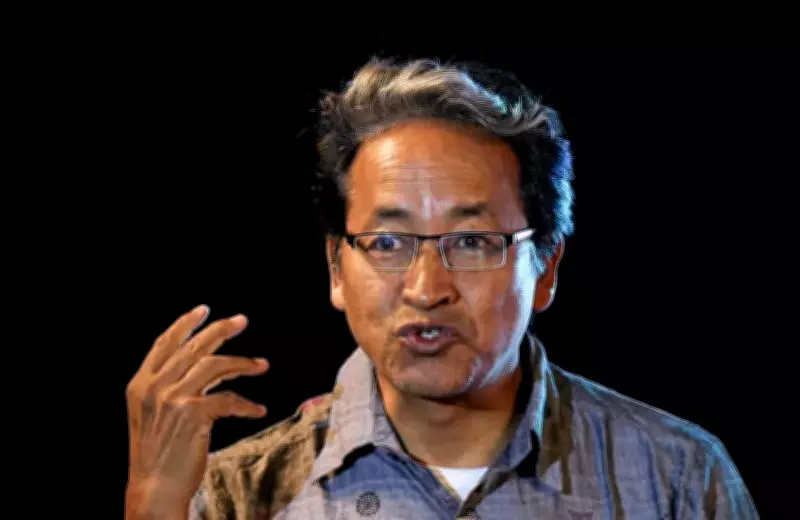
Political observers and leaders expressed intrigue over the Centre's Saturday decision to revoke the detention of climate activist Sonam Wangchuk, but insiders indicated this move was anticipated. Officials and BJP sources revealed that the revocation of the National Security Act (NSA) against Wangchuk became imminent following a leadership change in the Union Territory of Ladakh.
Leadership Shift Precedes Release
RSS stalwart and former Jammu and Kashmir Deputy Chief Minister Kavinder Gupta was relocated to Himachal Pradesh as Governor on March 6. Subsequently, Vinay Kumar Saxena, a confidante of Prime Minister Narendra Modi, was appointed and took oath as Ladakh Lieutenant Governor on Friday. Wangchuk's detention under the NSA was revoked by the Ministry of Home Affairs on Saturday, just one day after Saxena's oath-taking ceremony.
The Ministry cited the necessity to facilitate dialogue in the region as the reason for this decision, despite previously defending the NSA against Wangchuk in the Supreme Court. The court is currently hearing a habeas corpus petition filed by Wangchuk's wife, Gitanjali Angmo.

Strategic Importance and Confidence-Building Measures
Sources highlighted that Wangchuk's release clearly signals the Centre's intent to initiate a new beginning in Ladakh, a region of strategic importance due to its 1,597-kilometer-long Line of Actual Control (LAC) along the India-China border in the western sector. Official sources emphasized that the government has consistently taken steps to address grievances and meet the needs of Ladakh's people.
Continuous dialogue with community leaders has been maintained for years at various levels. Special concessions, including a 15-year prospective domicile policy and 80 percent reservation for locals, have been granted. Wangchuk's release is viewed as an extension of ongoing confidence-building measures aimed at fostering stability and cooperation.
Impact of Protests and Government Response
Talks between the Ministry of Home Affairs and Ladakh stakeholders were reportedly hampered by protests, bandhs, and a foot march led by Wangchuk last year. Sources pointed to the violence of September 24, 2025, as unprecedented, causing major public disorder and impacting security in the sensitive region. This necessitated a criminal case and NSA detention to prevent further unrest.
Despite these challenges, the government continued negotiations with Ladakhi leadership. MHA officials explained that the revocation of Wangchuk's detention is a positive step, demonstrating the government's willingness to take proactive measures and resolve outstanding issues through dialogue and engagement.
Recent Policy Developments and Ongoing Talks
On June 3, 2025, the Home Ministry notified new domicile and reservation rules for Ladakh to protect local interests. These rules imposed stringent domicile conditions and reserved 85 percent of government job vacancies for residents. This move aligns with ongoing discussions between the government and groups like the Leh Apex Body (LAB) and Kargil Democratic Alliance.
These organizations are advocating for statehood for Ladakh and its inclusion in the Sixth Schedule of the Constitution. However, the government is proposing safeguards outside the ambit of the Sixth Schedule, indicating a nuanced approach to addressing regional demands while maintaining national security and administrative efficiency.
This development underscores the Centre's strategic outreach efforts in Ladakh, balancing security concerns with community engagement to pave the way for new beginnings in the region.