The 2026 Tamil Nadu Assembly election results have delivered a seismic shock to the political establishment, with the 'Vijay tsunami' completely demolishing the DMK's vaunted 'Dravidian model'. Chief Minister M K Stalin's defeat is a bitter echo of his father M Karunanidhi's loss to superstar M G Ramachandran in 1977. The victory of actor-politician Vijay's Tamilaga Vettri Kazhagam (TVK) has rewritten the state's political script.
The Scale of the Tsunami
TVK and its allies swept the polls, winning over 200 seats in the 234-member assembly. The DMK, which had ruled for two consecutive terms, was reduced to a rump of just over 30 seats. The AIADMK, once a dominant force, also suffered heavy losses, managing only single-digit seats. The result marks a historic realignment in Tamil Nadu politics, ending the decades-long duopoly of the DMK and AIADMK.
Stalin's 1977 Moment
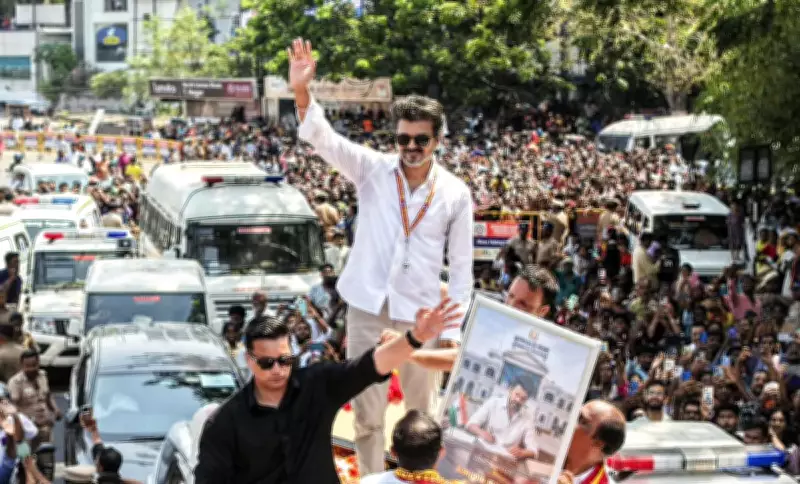
For Stalin, the defeat carries a deep personal resonance. In 1977, his father Karunanidhi lost to MGR, a matinee idol who leveraged his star power to build a political movement. Now, Stalin has been unseated by another film icon. Vijay, who entered politics only three years ago, tapped into widespread anti-incumbency and a yearning for change. His campaign focused on corruption, unemployment, and the DMK's perceived arrogance.

Why the Dravidian Model Failed
The DMK's 'Dravidian model', which emphasized social justice and welfare schemes, lost its sheen. Critics point to a series of scandals, including the controversial land grab allegations and the handling of the Kallakurichi hooch tragedy, which eroded public trust. Additionally, the party's reliance on caste-based vote banks was outmaneuvered by TVK's broader appeal to youth and the urban middle class.
Economic stagnation also played a role. Despite claims of progress, Tamil Nadu's industrial growth lagged behind southern peers, and unemployment among graduates remained high. The DMK's failure to address these issues created a fertile ground for Vijay's message of 'clean governance' and 'development'.
The Campaign Trail
Vijay's campaign was a masterclass in modern political mobilization. He used social media effectively, held massive rallies, and projected himself as a decisive leader. His slogan 'Vetri yaarukku? Tamizhagathukku!' (Victory for whom? For Tamil Nadu!) resonated across demographics. In contrast, Stalin's campaign appeared tired and defensive, unable to counter the wave of discontent.
The election also saw a high voter turnout of 78%, with many first-time voters backing TVK. The party's focus on local issues, such as water scarcity and infrastructure, paid dividends in rural areas, while its promises of transparency and digital governance attracted urban voters.
What Next for Tamil Nadu?
As Vijay prepares to take oath as chief minister, the state braces for a new political era. His party has promised a white paper on the state's finances, a crackdown on corruption, and a review of major projects. The DMK, meanwhile, faces a period of introspection. Stalin has resigned as party chief, paving the way for a new leadership battle. The AIADMK, too, is in disarray, with its future uncertain.
The 2026 election result is a reminder that in Tamil Nadu, political dynasties are never safe from the allure of a charismatic leader. For now, the 'Vijay tsunami' has swept away the old order, but the challenge of governing a complex state lies ahead.