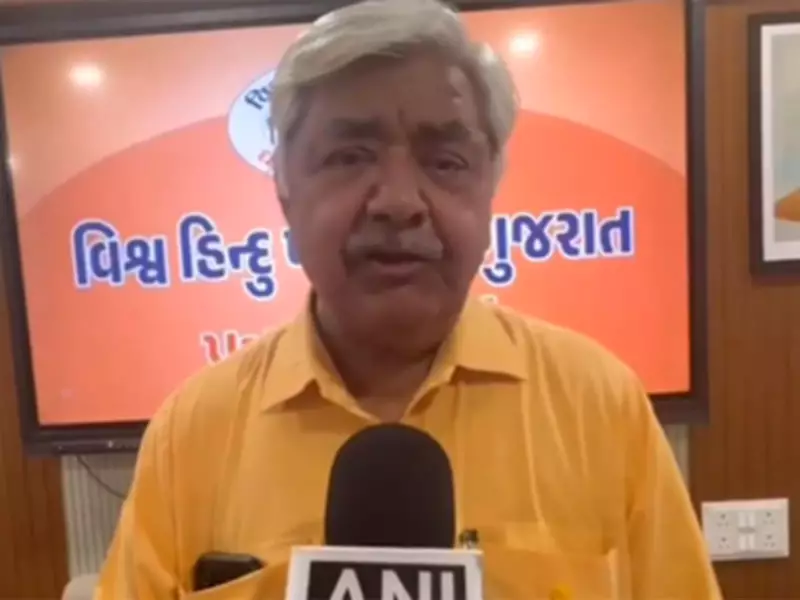
VHP Calls for Ban on Non-Hindus at Key Uttar Pradesh Temples
In a move that has intensified a simmering national debate over religious sanctity and public access, the Vishwa Hindu Parishad (VHP) demanded on Monday a ban on the entry of non-Hindus at major temples in Uttar Pradesh. This includes prominent sites such as the Ram Janmabhoomi in Ayodhya, Kashi Vishwanath Dham in Varanasi, and Krishna Janmabhoomi in Mathura.
Exemptions and Allegations by VHP Spokesperson
VHP national spokesperson Vinod Bansal stated that Sikhs, Buddhists, and Jains could be exempted from this proposed ban, arguing that their faiths originated in India. He alleged that there have been attempts by "ill-intentioned" non-Hindus to enter these temples, raising concerns about security and religious purity.
This demand follows a recent incident on January 10, where a 55-year-old man from Jammu and Kashmir, identified as Ahmed Sheikh, was detained after allegedly attempting to offer namaz inside the Ram Janmabhoomi temple complex. Family members claimed he was not mentally sound, adding a layer of complexity to the situation.
Similar Moves in Uttarakhand and Broader Context
The VHP's demand aligns with similar actions in Uttarakhand, where temple committees for Gangotri and Badrinath-Kedarnath have announced plans to bar non-Hindus from shrines. This is set to begin with the upcoming Char Dham Yatra season, after the portals of Gangotri and Yamunotri reopen in April.
Bansal emphasized that temples are places of worship, not tourist attractions. "The temples are not tourist spots for making reels. They are meant for worship," he said, advocating for strict enforcement of the ban to restrict entry of those he described as "anasthawan" (non-believers).
Pressure from Haridwar and Implications for Future Events
Pressure to restrict access has also emerged from Haridwar, where the Ganga Sabha, a trust managing religious affairs of the ghats, has demanded a ban on non-Hindus at the 2027 Kumbh Mela. This indicates a growing trend across northern India to limit temple access based on religious identity.
The debate touches on broader issues of religious freedom, cultural heritage, and public policy, with potential implications for tourism and interfaith relations in the region.