Historic Launch Set for India's First Vande Bharat Sleeper Train
India's railway network prepares for a groundbreaking moment this Saturday. The much-anticipated Vande Bharat Sleeper train makes its debut on January 17, 2026. This launch represents a significant expansion beyond the existing short-distance daytime services.
Prime Minister Narendra Modi will personally flag off the inaugural service from Malda in West Bengal. The event marks a historic milestone for the country's rail transportation system.
Connecting Eastern India with the Northeast
The first route features the Howrah–Kamakhya Vande Bharat Sleeper Express. This premium train connects Howrah Junction in West Bengal with Kamakhya Junction in Guwahati, Assam.

The service covers approximately 968 kilometers between these important eastern hubs. Travel time for the overnight journey reduces to about 14 hours.
This connection promises to transform regional connectivity between eastern India and the Northeast. The train will significantly cut travel time while supporting economic growth and boosting tourism in these regions.
Premium Features for Overnight Comfort
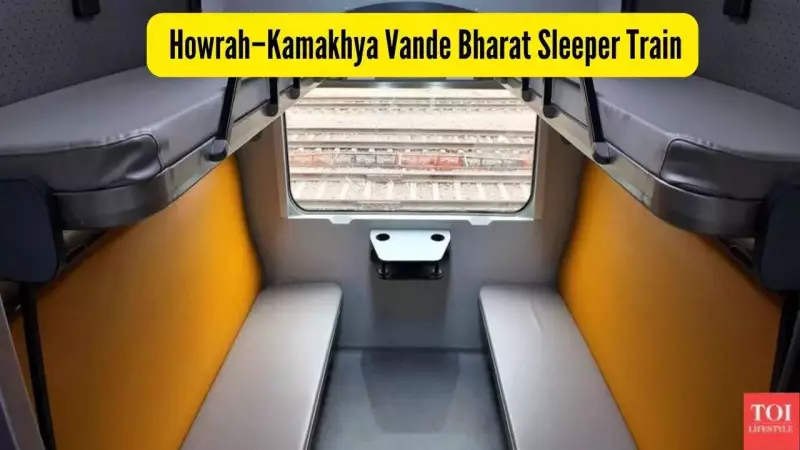
The sleeper variant differs substantially from existing chair-car Vande Bharat trains. Designed specifically for longer journeys, it offers fully air-conditioned modern sleeper coaches.
Passengers will experience several comfort-enhancing features:
- Ergonomic sleeping berths in all coaches
- Improved suspension systems for smoother rides
- Automatic doors throughout the train
- Advanced safety systems including Kavach automatic train protection
- Emergency communication systems for passenger safety
Make in India Initiative Takes Center Stage
The Vande Bharat Sleeper Train embodies India's Make in India initiative. All primary components underwent development and assembly within the country.
Bharat Earth Movers Limited (BEML) and the Integral Coach Factory (ICF) provided the technologies. The train boasts semi-high-speed capability with a maximum design speed reaching 180 km/h.
During regular operations, the train will maintain speeds around 130 km/h. Indian Railways plans to produce multiple Vande Bharat Sleeper trains in coming years to expand this service nationwide.
Service Details and Travel Information
The new service offers comprehensive travel options:
- Train Name: Vande Bharat Sleeper Express
- Train Numbers: 27575/27576
- Frequency: Six days weekly (excluding one weekly holiday each direction)
- Coaches: 16 coaches with total seating capacity of 823 passengers
- Food Service: Region-specific catering options
- Classes Available: AC First Class, AC 2-Tier, and AC 3-Tier
Fare structures provide multiple pricing options:
- AC 3-Tier: INR 960
- AC 2-Tier: INR 1,240
- AC 1-Tier: INR 1,520
The launch of the Vande Bharat Sleeper Express represents a major advancement in Indian transport history. With its inaugural run scheduled for January 17, 2026, this service establishes a new standard for overnight rail travel across the nation.