UPSC Directs Punjab Government to Submit DGP Candidate Proposal
In a significant development, the Union Public Service Commission (UPSC) has formally requested the Punjab government to send a proposal of eligible officers for the regular appointment of the Director General of Police (DGP) in the state. This action follows the Supreme Court's directions issued on February 5, which criticized the practice of states having acting DGPs and mandated the UPSC to intervene.
Background on the Acting DGP and Supreme Court Intervention
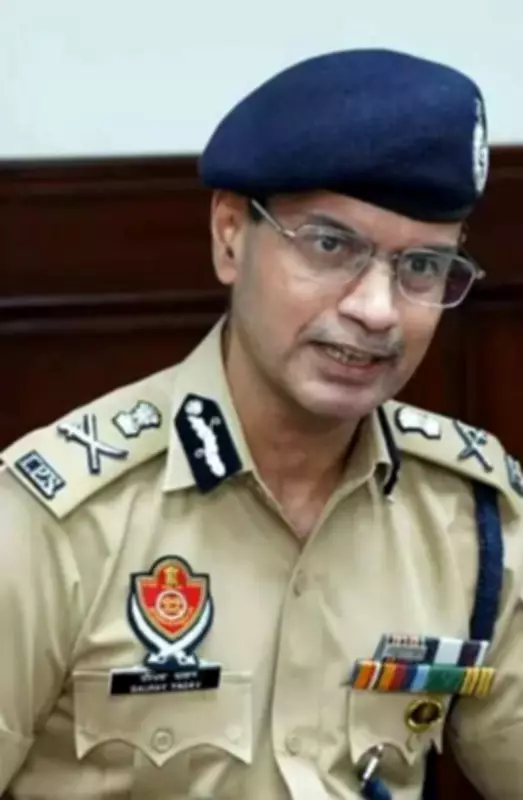
Gaurav Yadav, a 1992-batch Indian Police Service (IPS) officer of the Punjab cadre, was appointed as the acting DGP in July 2022 by the AAP-led government, which came to power earlier that year in March. His appointment superseded several senior officers, and he has now held the position for over three years and seven months. The Supreme Court, in its February 5 order, slammed such prolonged acting appointments and directed the UPSC to take corrective measures.
UPSC's Formal Communication and Legal References
In a letter dated February 18 to the Punjab chief secretary, the UPSC cited the Supreme Court's February 5 directions, the September 2006 judgment in the Prakash Singh case, and SC orders from July 3, 2018. The commission has asked Punjab to submit a complete proposal within 10 days, emphasizing the urgency of the matter. The Punjab home department has subsequently instructed the DGP's office to compile a panel of eligible officers, as it maintains the necessary records.

Current Police Force Dynamics and Candidate Pool
Punjab currently has a top-heavy police force with 17 DGP-rank officers. Among the seniormost IPS officers, 1989-batch officer Sanjeev Kalra, who is due to retire on February 28, is likely out of contention due to the six-month service-left rule for consideration as head of the police force. Parag Jain, serving as RAW chief on central deputation, is also unlikely to return for a state post. This leaves four 1992-batch IPS officers, including Gaurav Yadav, as potential candidates. The other three DGP-rank officers from this batch are Sharad Satya Chauhan, Harpreet Singh Sidhu, and Kuldeep Singh.
Selection Process and Committee Composition
The UPSC empanelment committee is expected to select three candidates based on criteria such as seniority, experience, and service records. Punjab will then choose one of them as the permanent DGP. The committee comprises the UPSC chairman or a member acting as chairman, the Union home secretary or a nominee not below the rank of special secretary, the head of a central police organization nominated by the Ministry of Home Affairs (who is not from the same state cadre), the chief secretary of the state government, and the DGP. As the acting DGP and a contender, Gaurav Yadav is unlikely to be a member of this committee, a precedent supported by a recent SC allowance for Tamil Nadu to appoint an officer of equal or higher rank in similar circumstances.
Legislative Context and Future Implications
In June 2023, the Punjab assembly passed The Punjab Police (Amendment) Bill 2023, aiming to circumvent the Supreme Court-mandated UPSC procedure by establishing a state-controlled seven-member empanelment committee. However, this bill is currently lying with the President after being referred by the Governor, and its future remains uncertain. The UPSC's letter to Punjab also highlighted the Supreme Court's warning: if states fail to submit timely proposals, the UPSC is authorized to seek court enforcement with "necessary consequences" for those responsible for delays. The commission has considered the date of vacancy occurrence as February 5, aligning with the judgment date.
Despite initial controversy over his appointment, Gaurav Yadav remains a frontrunner for the permanent DGP post, given his tenure and experience. The upcoming selection process will be closely watched as it unfolds under the Supreme Court's oversight, potentially setting a precedent for other states with similar acting appointments.