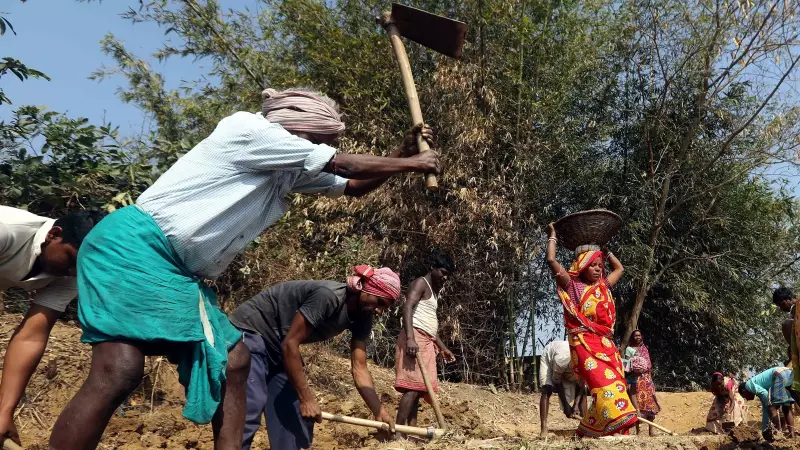
A proposal by the current NDA government to halt the Mahatma Gandhi National Rural Employment Guarantee Act (MGNREGA) works during peak farming seasons and shift to a cost-sharing model with states has ignited fierce political debate. However, historical records reveal these are not new ideas; they were intensely debated within the previous United Progressive Alliance (UPA) government as well.
The UPA-II Tussle: Pawar's Demand vs Ramesh's Defence
Back in 2011, a significant internal conflict emerged within the UPA-II cabinet. Sharad Pawar, then holding the portfolio of Agriculture Minister, raised a red flag regarding the impact of the rural jobs scheme on agriculture. In a letter to the then Prime Minister Manmohan Singh, Pawar argued that the guarantee of work under MGNREGA was drawing crucial farm labourers away from vital agricultural operations during the critical sowing and harvesting seasons.
Pawar contended that the scheme was designed as a safety net for the lean season when farm work was scarce, not to compete with peak agricultural demand. He reportedly advocated for pausing the scheme for at least three months during these busy periods to ensure adequate labour availability for farmers.

This proposal was strongly contested by the then Rural Development Minister, Jairam Ramesh. Ramesh presented a counter-argument, backed by an analysis of man-days generated, showing that the bulk of MGNREGA employment was actually created during the lean agricultural season. He further believed the scheme empowered labourers by increasing their bargaining power in the rural economy.
Compromise and Continued Funding Friction
The disagreement between the two senior ministers escalated through an exchange of letters, ultimately requiring Prime Minister Manmohan Singh's intervention. The resolution came in the form of a compromise. Instead of halting the scheme, the government decided to expand its scope to include core agricultural activities.
Consequently, in 2012, 30 new types of works were added to the permissible list under MGNREGA. These included tasks related to watershed development, irrigation, flood management, agricultural and livestock activities, fisheries, coastal area works, and rural drinking water and sanitation.
Parallel to this policy debate, the UPA-II government grappled with funding issues for the flagship scheme. The Finance Ministry, then under P. Chidambaram, proposed significant budget cuts. The allocation was reduced from Rs 40,000 crore in 2011-12 to Rs 33,000 crore in 2012-13. Minister Jairam Ramesh vehemently opposed these cuts in communications to Chidambaram, warning they would severely cripple the programme's effectiveness.
Interestingly, sources indicate that Chidambaram had earlier, during UPA-I, favoured a model where states would bear a certain percentage of the scheme's cost. This idea was resisted by the then Rural Development Minister, Raghuvansh Prasad Singh, leading to PM Singh's decision that the Centre would fund the programme entirely.
History Repeats in Current Political Discourse
These two core issues—seasonal pause and cost-sharing—have now resurfaced at the centre of a fresh political storm. The NDA government's proposed VB-G Ram G Bill, 2025, which seeks to replace MGNREGA, incorporates similar changes. The Opposition, led by the Congress, has sharply criticised the move, with Congress President Mallikarjun Kharge accusing the government of attempting to dismantle the scheme.
In a twist of irony, Jairam Ramesh, now a key Opposition figure, has demanded that the new bill be sent to a Parliamentary Standing Committee for detailed scrutiny. This historical context shows that while the political blame game is current, the substantive questions about MGNREGA's implementation, its impact on agricultural labour markets, and its financing have been subjects of serious internal government debate for over a decade.