Trump's Crisis Management Playbook Faces Major Test in Minneapolis
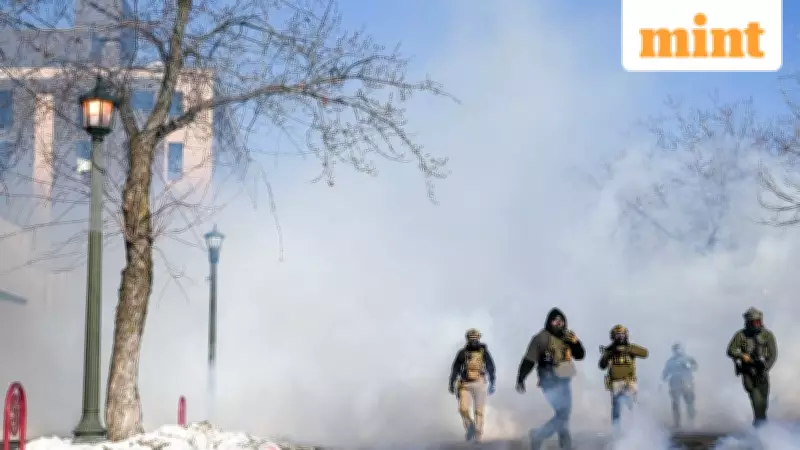
The well-established crisis response strategy of President Trump and his administration has encountered significant resistance following a controversial federal shooting incident in Minneapolis. What was once a reliable political tool has now backfired spectacularly, forcing a dramatic shift in approach as the White House attempts to contain mounting political damage.
From Aggression to Damage Control
President Trump built his political career on a foundation of unwavering confidence and aggressive confrontation during moments of crisis. His philosophy of never conceding ground, refusing to acknowledge mistakes, and launching counterattacks served him well through real estate ventures, reality television, and political campaigns. However, this approach has proven ineffective in the aftermath of a federal immigration agent shooting and killing Alex Pretti, a 37-year-old intensive-care nurse in Minneapolis.
The administration's initial response followed the established playbook perfectly. Top officials, including Homeland Security Secretary Kristi Noem and White House deputy chief of staff Stephen Miller, characterized Pretti as a domestic terrorist who allegedly attempted to massacre law enforcement agents. This harsh rhetoric represented the administration's standard operating procedure for crisis management.

Contradictory Evidence Forces Strategy Shift
The administration's narrative began to unravel when preliminary government reports and multiple bystander videos contradicted official accounts of the shooting incident. This evidentiary conflict has compelled Trump and his advisers to abandon their aggressive posture and adopt a more conciliatory tone toward the volatile situation in Minneapolis.
Rather than continuing with inflammatory accusations, the administration has shifted to calling for de-escalation and easing tensions in the Minnesota city. President Trump has even criticized his own administration's on-the-ground commander, Gregory Bovino, describing him as "a pretty out-there kind of a guy." This represents a significant departure from the president's typical unwavering support for his team members.
Internal Frustration and Blame Shifting
Within administration circles, frustration has mounted as officials attempt to explain why inaccurate descriptions of events were provided immediately following Pretti's death. Homeland Security Secretary Kristi Noem has borne the brunt of bipartisan criticism, with some Republicans calling for her resignation and Democrats demanding impeachment proceedings.
Stephen Miller has attempted to deflect criticism by blaming U.S. Customs and Border Protection for providing initial reports from what he described as "a very chaotic scene on the ground." Miller further suggested that CBP might not have followed White House protocols regarding having additional agents available to manage protesters, potentially compromising the apprehension mission.
Strategic Personnel Changes and New Focus
The administration has implemented strategic personnel changes in response to the crisis. President Trump has dispatched border czar Tom Homan to Minnesota, elevating an adviser known for advocating more methodical approaches to deportations while sidelining the controversial Bovino. Homan has engaged in what both sides describe as productive talks with Democratic Governor Tim Walz and other local officials.
Trump's revised strategy involves shifting focus toward alleged fraud in Minnesota while increasing criticism of state and local leadership. The president has publicly expressed frustration with Minneapolis Mayor Jacob Frey, accusing him of "PLAYING WITH FIRE" for refusing to cooperate with federal deportation efforts. Frey has responded by emphasizing that local police priorities should center on preventing homicides rather than immigration enforcement.

Broader Implications and Historical Context
This incident represents the latest example of the Trump administration's crisis management approach facing significant challenges. Earlier this month, immigration officials employed similar tactics following the shooting of Renee Good by a U.S. Immigration and Customs Enforcement officer, with Noem again labeling the incident as "domestic terrorism." The resulting controversy has led to at least half a dozen prosecutors resigning from the U.S. attorney's office in Minnesota over concerns about the administration's handling of the federal investigation.
President Trump has expressed annoyance that the Minnesota controversy is overshadowing what he perceives as his administration's successes, particularly in economic matters and crime reduction. During a recent Fox News interview, he emphasized his administration's achievements in removing "murderers" and "drug dealers" while lamenting disproportionate media focus on isolated incidents.
Despite the strategic shift, some Trump supporters advocate for maintaining aggressive postures. Influential figures like Steve Bannon have warned against any perceived retreat, declaring on his "War Room" podcast that "MAGA ain't backing down. We're not in the back down business." This tension between pragmatic damage control and ideological commitment continues to shape the administration's response to the Minneapolis crisis.