

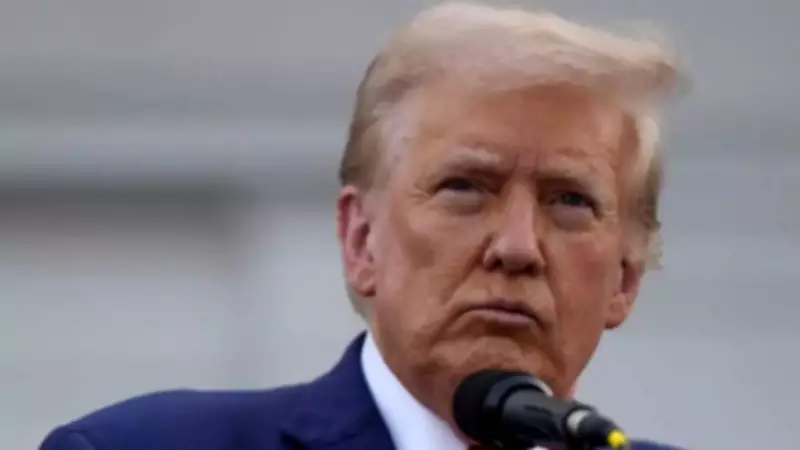
Trump's Public Rebuke of GOP Congressman Massie Sparks Party Tensions
In a striking display of internal discord, former President Donald Trump openly lambasted Republican Congressman Thomas Massie of Kentucky during his remarks at the National Prayer Breakfast on Thursday. Trump branded Massie a "moron," underscoring the deepening fractures within the Republican Party over legislative alignment and ideological purity.
Trump's Remarks on Party Unity and Massie's Opposition
While addressing the theme of party cohesion on legislative matters, Trump noted that Republicans typically rally behind party initiatives with near-unanimous support. However, he singled out Massie as a persistent exception. "No matter what we do, this moron, no matter what it is," Trump declared. "We'll get a 100% vote except for this guy named Thomas Massie. There's something wrong with him."
Trump further mocked Massie by comparing him to Senator Rand Paul, stating, "We call him Rand Paul Jr. They love voting NO." This public denunciation comes amid Trump's active efforts to unseat Massie, having endorsed his GOP primary challenger, retired Navy SEAL Ed Gallrein, and urging party members to support the incumbent's removal.

Massie's Response and Policy Stances
Reacting swiftly to Trump's comments, Massie took to social media platform X to defend his record. "The President of the United States called me a moron at the National Prayer Breakfast this morning because I'm still fighting for what he promised the American people," Massie wrote. He listed his core principles, which include reducing federal spending, opposing new military conflicts, ending foreign aid, defending constitutional amendments (specifically the First, Second, and Fourth), advocating for pro-life policies, and exposing sex traffickers.
Massie, known for his libertarian-leaning views, has frequently clashed with Trump-backed legislation, particularly on major tax reforms and expansive spending bills. He has also challenged presidential authority regarding military actions without explicit congressional approval, positioning himself as a staunch defender of legislative oversight.
Bipartisan Push for Epstein Files Transparency
Beyond his policy disagreements with Trump, Massie has garnered significant attention for his bipartisan initiative to ensure transparency in government records related to convicted sex offender Jeffrey Epstein. Together with Democratic Representative Ro Khanna of California, Massie co-authored the Epstein Files Transparency Act, which was signed into law in November 2025. This legislation mandates the Justice Department to release nearly all documents pertaining to Epstein and his associate Ghislaine Maxwell.
Despite this legal mandate, Massie and Khanna have accused the Justice Department of non-compliance, citing delays in releases and excessive redactions in the documents. In a letter dated January 30 to Deputy Attorney General Todd Blanche, the lawmakers requested the appointment of a special master to review unredacted records. They argued that without full access, Congress cannot effectively oversee the department's actions.
While the Justice Department contends that its recent disclosure of over three million pages fulfills the law's requirements, Massie remains critical. Trump has dismissed the Epstein files as a "Democrat hoax," but Massie has defiantly responded on social media: "It was not a hoax, I cannot be bullied, I am not done, and this is why those in power are doing everything in their power to defeat me."
Implications for GOP Unity and Future Elections
This public feud highlights the ongoing struggle within the Republican Party between establishment-aligned figures and more independent, libertarian-minded members like Massie. As the 2026 election cycle approaches, Trump's endorsement of Gallrein signals a concerted effort to purge dissenters and consolidate party loyalty. Massie's unwavering stance, coupled with his bipartisan work on transparency issues, presents a unique challenge to this strategy, potentially influencing voter perceptions and intra-party dynamics.

The incident at the National Prayer Breakfast, typically a venue for unity and reflection, has instead become a flashpoint for political confrontation, revealing the persistent tensions that continue to shape the GOP's internal landscape.





