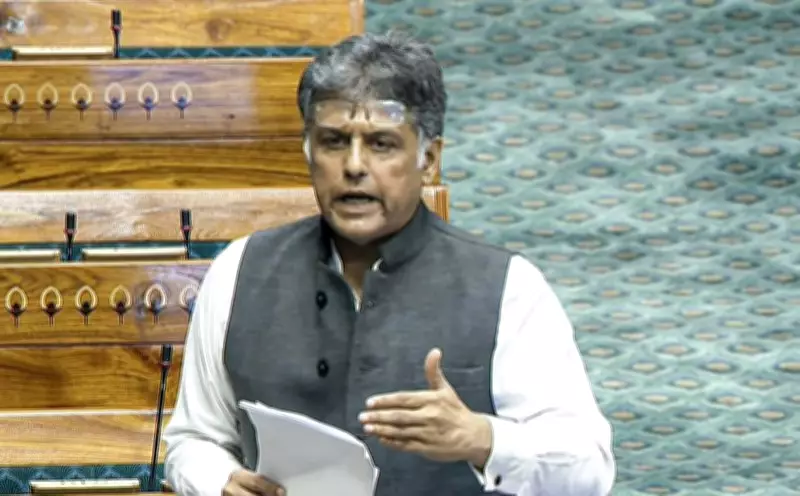
Congress MP Manish Tewari Denounces Government Air Quality Data as 'Inane' Amid Delhi Pollution Crisis
In a sharp rebuke to the central government, Congress Member of Parliament Manish Tewari has labeled official air quality statistics as "inane", sparking a heated political debate over environmental governance. This criticism comes in response to recent reports revealing that Delhi has already experienced 10 severe Air Quality Index (AQI) days this year, underscoring a deepening public health emergency in the national capital.
Delhi's Alarming Pollution Levels Trigger Political Confrontation
The controversy erupted after data from environmental monitoring agencies highlighted Delhi's deteriorating air quality, with AQI readings frequently surpassing hazardous thresholds. Tewari, known for his vocal stance on policy issues, accused the government of downplaying the severity of the crisis through misleading or inadequate statistical reporting. He argued that such data fails to capture the true extent of residents' exposure to toxic pollutants, which include particulate matter (PM2.5 and PM10), nitrogen oxides, and other harmful substances linked to respiratory and cardiovascular diseases.
"The government's approach to air quality management is not just flawed but dangerously negligent," Tewari stated in a public address. "By presenting inane statistics, they are obscuring a reality where millions in Delhi are breathing poison daily. This isn't just about numbers; it's about lives at risk and a failure of governance."
Analysis of Delhi's Severe AQI Days and Government Response
According to the reports cited by Tewari, the 10 severe AQI days in Delhi represent a significant spike compared to previous years, attributed to factors such as:
- Industrial emissions from nearby manufacturing hubs
- Vehicular pollution exacerbated by traffic congestion
- Agricultural stubble burning in neighboring states
- Construction activities and dust storms
In response, government officials have defended their data collection and pollution control measures, pointing to initiatives like the Graded Response Action Plan (GRAP) and increased monitoring stations. However, critics like Tewari contend that these efforts are insufficient, citing ongoing violations of environmental norms and a lack of stringent enforcement against polluters.
Broader Implications for Public Health and Policy
The political clash over air quality statistics has broader implications for public health and policy in India. Medical experts warn that prolonged exposure to severe AQI levels can lead to:
- Increased rates of asthma and bronchitis
- Higher risks of heart attacks and strokes
- Adverse effects on children's cognitive development
- Elevated mortality rates among vulnerable populations
Tewari's criticism aligns with growing public frustration over air pollution, which has become a key issue in urban governance debates. Environmental activists have echoed his concerns, calling for more transparent data reporting and aggressive action plans to curb emissions.
As Delhi grapples with this environmental crisis, the controversy highlights the urgent need for collaborative efforts between government bodies, opposition parties, and civil society to address air pollution effectively. The coming months will be critical in determining whether policy adjustments can mitigate the severe AQI days and restore public trust in environmental governance.