Tejashwi Yadav Condemns Nitish Kumar's Rajya Sabha Transition as 'Betrayal of People's Mandate'
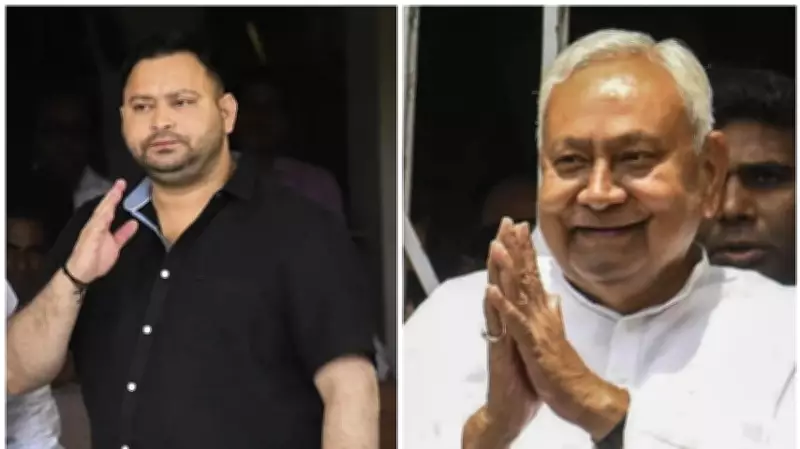
In a sharp political critique, Rashtriya Janata Dal (RJD) leader Tejashwi Yadav has denounced Bihar Chief Minister Nitish Kumar's decision to enter the Rajya Sabha, labeling it a "betrayal of the people's mandate." Yadav's remarks, made on March 5, 2026, highlight escalating tensions in Bihar's political landscape, where Kumar's move is seen as a significant shift with potential national implications.
Allegations of BJP Hijacking Kumar's Political Trajectory
Yadav alleged that the veteran leader's transition to the Rajya Sabha is directly linked to the Bharatiya Janata Party (BJP) having "hijacked" Kumar's political stance. This accusation underscores the complex dynamics between Kumar's Janata Dal (United) and the BJP, which have been coalition partners in Bihar. Yadav suggested that Kumar's entry into the upper house of Parliament is not a voluntary career move but rather a strategic maneuver influenced by the BJP, aimed at consolidating power and sidelining opposition voices in the state.
The RJD leader emphasized that this development represents a departure from the electoral promises and public trust placed in Kumar, who has long positioned himself as a key figure in Bihar's governance. By moving to the Rajya Sabha, Kumar may be perceived as distancing himself from direct state-level responsibilities, raising questions about his commitment to addressing local issues and fulfilling the mandate given by Bihar's voters.

Broader Implications for Bihar and National Politics
This political maneuver could have far-reaching consequences:
- Impact on Bihar's Governance: Kumar's shift might lead to changes in administrative focus and policy implementation in Bihar, potentially affecting development projects and public welfare schemes.
- Strengthening of BJP's Influence: Yadav's claims point to a scenario where the BJP gains greater control over Bihar's political narrative, possibly altering coalition dynamics and opposition strategies.
- Erosion of Public Trust: The allegation of betrayal could resonate with voters, influencing future elections and political alignments in the state.
Yadav's criticism reflects broader concerns about political integrity and accountability, as leaders navigate the delicate balance between state duties and national roles. The Rajya Sabha entry, while a constitutional right for elected representatives, is being framed by the opposition as a symbolic retreat from grassroots engagement.
Historical Context and Future Outlook
Nitish Kumar, a seasoned politician with decades of experience in Bihar politics, has often been seen as a pivotal figure in shaping the state's trajectory. His potential move to the Rajya Sabha marks a notable chapter in his career, sparking debates about legacy and future ambitions. Political analysts suggest that this could be a strategic step to enhance his national profile or secure a stable position amid shifting alliances.
As the situation unfolds, stakeholders are closely monitoring:
- Reactions from Other Parties: How allies and opponents in Bihar and at the national level respond to these developments.
- Public Sentiment: Whether Yadav's allegations gain traction among citizens and influence political discourse.
- Legal and Constitutional Aspects: Ensuring that the transition adheres to electoral laws and parliamentary procedures.
In summary, Tejashwi Yadav's condemnation of Nitish Kumar's Rajya Sabha entry as a betrayal underscores deep-seated political rivalries and the ongoing struggle for influence in Bihar. With the BJP's role under scrutiny, this episode may redefine power equations and set the stage for future electoral battles, emphasizing the need for transparency and adherence to democratic principles in India's federal structure.