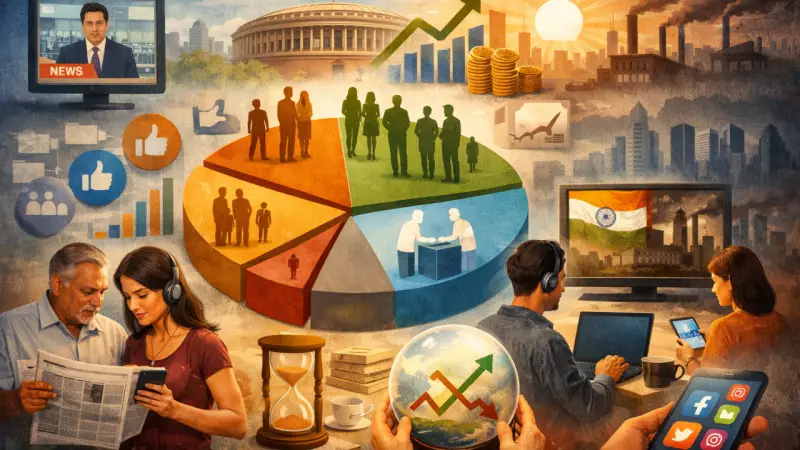
A recent survey conducted by The Times of India, called the Habit Index, has provided deep insights into how the Indian public engages with political and national news. The findings paint a picture of a nation deeply invested in current affairs, with a significant majority actively tracking daily developments.
How India Consumes National News: Key Findings
The survey's core revelation is the high level of daily engagement with political and national news. Over 61% of respondents stated they actively follow such news updates every day, demonstrating a robust appetite for information on governance and current events. In contrast, nearly 25% identified as occasional consumers, checking headlines now and then. A smaller segment, just over 6%, admitted to rarely following this news cycle, while around 4% engage only during major events like elections.
For the daily news followers, the primary draw is clear. Government policies and governance emerged as the most engaging topics, closely followed by stories centered on the economy and national development. Interestingly, more than a quarter of this group consumes "a bit of everything," indicating a broad, well-rounded interest rather than a narrow focus on a single subject.

Triggers and Trust: What Drives News Consumption?
The habits of occasional news consumers differ markedly. For this group, engagement is primarily triggered by big headline events and stories trending on social media. Over a third said they turn to news when major events dominate the headlines, while a similar proportion is prompted by social media trends. News that has a direct impact on daily life ranked surprisingly lower as a motivator for this audience.
For those who actively avoid political news, the reasons are telling. The top deterrents cited were negativity and repetitive coverage. Following closely were a lack of trust in the media, a feeling that political news is irrelevant to their lives, and the struggle to find unbiased, reliable sources of information.
Platform Preferences and Credibility Markers
The survey also mapped the evolving media landscape in India. While television remains a significant force, with nearly one-third of respondents relying on TV channels due to perceived credibility and the appeal of live debates, digital platforms have taken the lead. Online news portals and apps are the most preferred source overall, chosen by over 41% of those surveyed.
For digital news consumers, credibility is defined by transparency, a clear separation between news reports and opinion pieces, and the absence of sensational clickbait. Social media platforms account for over 23% of news consumption, driven by instant updates, visual formats, and short-form content. Trust in news received via WhatsApp and word-of-mouth stems primarily from the fact it comes from familiar, known contacts.
National Outlook: Confidence and Concerns for 2025
When asked about India's overall direction in 2025, the survey revealed a generally optimistic populace. More than 42% expressed being very confident about the country's future, with their optimism rooted in expectations of strong economic growth, job creation, and technological advancement. Nearly one in four respondents described themselves as cautiously positive, adding that more focused attention on education, healthcare, and skill development is needed.
However, a note of caution persists. About a quarter of those surveyed held mixed feelings, pointing to concerns like political instability, economic uncertainty, and social polarisation. A smaller, pessimistic group cited governance issues, rising costs of living, and limited job opportunities as their primary worries. For this segment, rebuilding confidence would require stronger economic performance, more transparent leadership, and tangible improvements in healthcare and education systems.