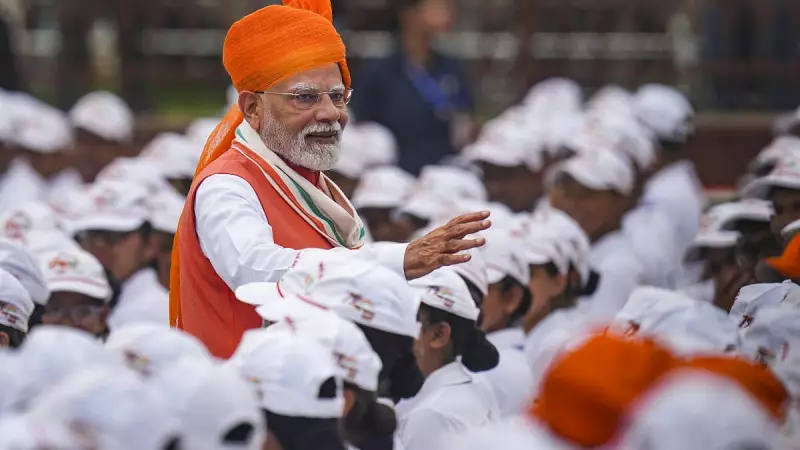
Prime Minister Narendra Modi faces a complex challenge in engaging with India's Generation Z, a demographic divide highlighted by contrasting aspirations in the country's northern and southern regions. This dilemma forms the core of a recent analysis examining the political and social landscape for India's youth.
The Great Indian Youth Divide
According to commentator Bharat Bhushan, a clear schism is visible in the priorities of young Indians. In South India, members of Gen Z are predominantly channeling their energy into securing modern industrial careers and building professional futures. Their focus appears centered on education, skill development, and entering contemporary job markets, from technology to manufacturing.
Conversely, the analysis suggests that in North India, a significant segment of the youth is more visibly engaged with cultural and political symbolism. The piece specifically mentions saffron bandanas and scarves, items often associated with Hindu nationalist imagery, as markers of this engagement. Here, youthful frustration, the argument goes, is being expended through different channels, leaning more towards identity-driven narratives.

Co-option or Political Control?
The central question posed is whether the current political approach under Prime Minister Modi represents a genuine co-option of youth energy into national development or a strategy of control through polarized mobilization. The piece implies that the government's outreach to young voters must navigate this regional divergence in aspirations and expressions.
The analysis, published on January 2, 2026, suggests that the uniform national strategies may not resonate equally across India's diverse geography. The writer, Bharat Bhushan, points to this North-South contrast as a critical factor in understanding the evolving political allegiance of India's largest voting bloc.
Implications for Policy and Politics
This identified divide carries substantial implications for governance, economic policy, and political campaigning. A one-size-fits-all promise of jobs or development may not address the nuanced expectations of youth in different regions. The southern states' emphasis on industrial careers calls for targeted investments in education and sector-specific growth.
Meanwhile, the stronger cultural-political currents in the North, as described, indicate a landscape where identity and sentiment play a powerful role. Navigating this youth dilemma is therefore positioned as one of the most significant tasks for the Modi administration and Indian politics at large. The ability to bridge this gap or successfully manage both narratives could define the political trajectory for the coming years.
Ultimately, the opinion piece frames this not just as a demographic observation but as a pivotal national question. How India's leadership addresses the distinct energies of its Gen Z population—whether in the tech parks of Hyderabad and Bengaluru or the political rallies of the Hindi heartland—will significantly impact the country's social cohesion and economic future.