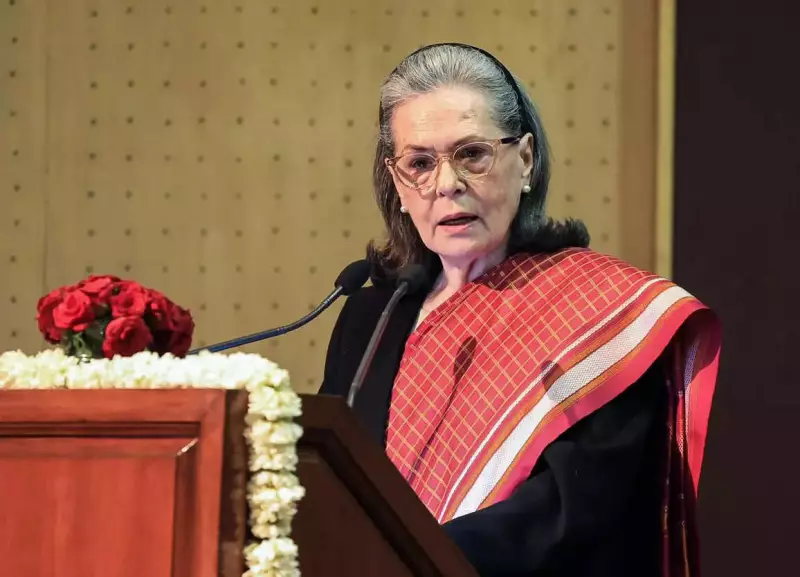
Senior Congress leader Sonia Gandhi launched a sharp attack on the ruling Bharatiya Janata Party (BJP) on Friday, making a significant political allegation. She stated that the primary objective of the current establishment is to systematically remove the legacy of India's first Prime Minister, Jawaharlal Nehru. Furthermore, she accused them of seeking to dismantle the very social, political, and economic foundations upon which modern India was built.
Allegations of Ideological Erasure
Sonia Gandhi, a key figure in the opposition, did not mince her words during her address. She claimed that the forces actively working against Nehru's memory are driven by an ideology that played no part in India's historic freedom struggle. She emphasized that this same ideology had no role in the monumental task of framing the Indian Constitution. According to her, this represents a fundamental clash over the nation's soul and its historical narrative.
Drawing a Line to Gandhi's Assassination
In one of her most severe charges, the Congress leader connected the dots to a dark chapter in Indian history. She alleged that the ideology now targeting Nehru is the same one that created an atmosphere of hatred leading to the assassination of Mahatma Gandhi. She accused contemporary adherents of continuing to glorify Nathuram Godse and others involved in Gandhi's murder. Sonia Gandhi described this worldview as having a "bigoted and viciously communal outlook," arguing that its concept of nationhood thrives on stoking various prejudices.

Contextualizing Historical Critique
While acknowledging that a towering historical figure like Nehru is naturally subject to analysis and critique, Sonia Gandhi highlighted a concerning trend. She pointed out that it has become common practice to judge Nehru's actions and decisions in isolation. Critics often divorce him from the immense challenges he faced as the leader of a newly independent and partitioned nation. She stressed the importance of viewing his contributions and decisions within their proper historical context, rather than through a modern, revisionist lens.
The remarks, made in the national capital, are seen as a direct counter to the BJP's persistent criticism of the Nehru-Gandhi family and the Congress party's legacy. This ongoing debate over historical narratives and foundational figures remains a central fault line in Indian politics today.