Sikkim's Transformative Journey: From Himalayan Kingdom to Indian State
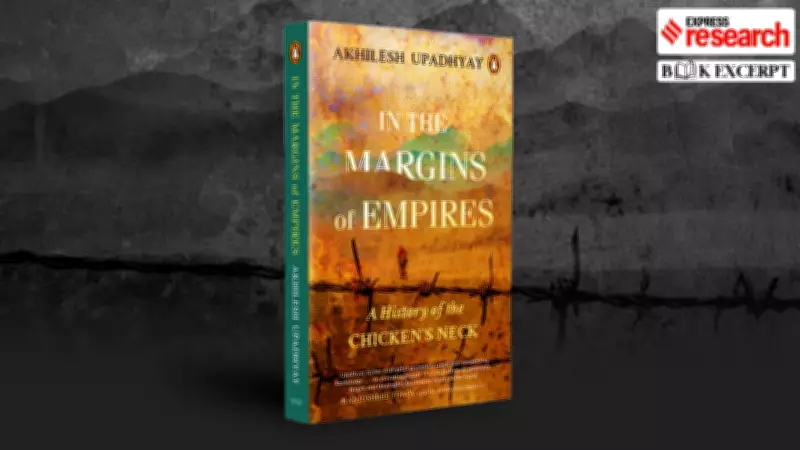
Akhilesh Upadhyay's compelling new work, In the Margins of Empires: A History of the Chicken's Neck, published by Penguin Random House India, offers a profound exploration of the eastern Himalayan region's borderland communities. These populations frequently find themselves entangled within the powerful crosscurrents of larger geopolitical rivalries that shape South Asia's destiny.
The Personal Connection and Geopolitical Context
The author's journey began with a deeply personal experience during an editorial assignment in eastern Nepal's Jhapa district during the early 1990s. There, Upadhyay encountered Lhotshampa refugees who had been expelled from Bhutan and were living in United Nations-administered camps. "Tens of thousands of them had travelled to this side of the Mechi River through the Chicken's Neck. They had left behind their homes … with their infants. It broke my heart," he writes, capturing the human cost of geopolitical displacements.
Between 2008 and 2018, Upadhyay conducted extensive research through multiple visits to China, the Tibetan Autonomous Region, and New Delhi. His interactions with officials and scholars provided crucial insights into evolving bilateral and regional dynamics. The book argues that both China and India were rapidly emerging as superpowers during this period, with the global geopolitical pivot decisively shifting eastward.

The Era of British Colonial Influence
The British Empire's multifaceted influence on Sikkim encompassed diplomacy, conflict, and modernization efforts that fundamentally reshaped the kingdom's trajectory. As early as 1774, Warren Hastings, the first Governor-General of India, recognized Sikkim's geopolitical significance, dispatching Captain Samuel Turner to negotiate trade relations with the kingdom.
The Treaty of Titalia in 1817 between Sikkim and the East India Company marked a crucial turning point. Under this agreement, Sikkim regained territory previously annexed by Nepal while pledging allegiance to British India in exchange for protection. The kingdom also granted the EIC trading rights and access to the Tibetan frontier, essentially establishing Sikkim as a client state under British hegemony.
The mid-nineteenth century witnessed escalating tensions that culminated in the Anglo-Sikkimese War of 1861 and the subsequent Treaty of Tumlong. This treaty mandated that Sikkim recognize British suzerainty and permit the establishment of a British political officer in Gangtok, effectively institutionalizing colonial oversight over the kingdom's affairs.
Internal Divisions and Colonial Policies
British interference in Sikkim's internal matters significantly exacerbated existing tensions among the kingdom's diverse communities. The monarchy faced persistent challenges from the Lepcha, Bhutia, and Nepali communities, each vying for political and economic dominance within the region.
Colonial policies often deepened these ethnic divides, particularly when favoring one group over another. The introduction of land revenue systems disrupted traditional agricultural practices and disproportionately affected the peasantry. While limited educational initiatives introduced Western-style schooling, creating a small but influential class of English-educated elites, these changes primarily served British interests rather than uplifting the local population.
The Transition to Indian Administration
Following India's independence in 1947, the new government under Prime Minister Jawaharlal Nehru sought to maintain Sikkim's status as a protectorate while ensuring its security and economic development. The Indo-Sikkim Treaty of 1950 formalized this arrangement, granting India control over Sikkim's external affairs, defense, and communications while allowing the Chogyal to retain internal autonomy.
Demographic shifts resulting from Nepali immigration during the colonial period created significant challenges. The Nepali community's demands for greater political representation frequently clashed with the interests of the Bhutia and Lepcha communities, leading to persistent ethnic tensions that successive rulers struggled to mediate effectively.

The Monarchy's Decline and Democratic Movements
When Palden Thondup Namgyal ascended to the throne in 1963, he inherited a kingdom fraught with internal divisions and external pressures. Unlike his father, he faced a rapidly changing political environment characterized by the rise of democratic movements within Sikkim and India's growing assertiveness in regional affairs.
The Chogyal's attempts to strengthen monarchical authority alienated key population segments, particularly the Nepali majority. His marriage to American socialite Hope Cooke, while initially garnering international attention, fueled perceptions of elitism and detachment from ordinary Sikkimese citizens' concerns. The ruler's resistance to democratic reforms increasingly isolated him from both his subjects and India, which began viewing Sikkim's monarchy as an impediment to regional stability.
The Political Crisis and Integration
The 1950s and 1960s witnessed growing dissatisfaction among Sikkim's population, especially the Nepali-speaking majority who demanded political representation and socio-economic reforms. The Sikkim State Congress emerged as a key force advocating for the abolition of feudal privileges and the establishment of democratic governance.
The political crisis reached its climax in 1973 when widespread protests erupted against the monarchy, initially triggered by allegations of electoral malpractices but quickly escalating into a broader movement demanding the abolition of feudal rule. The Sikkim State Congress and other pro-democracy groups spearheaded these protests, receiving substantial support from India.
The Tripartite Agreement of 1973, signed by the Chogyal, the Sikkim State Congress, and the Indian government, marked the beginning of the end for Sikkim's monarchy. This agreement established a new political structure that significantly curtailed the Chogyal's powers while paving the way for greater Indian involvement in governance.
The Watershed Referendum of 1975
The defining moment in Sikkim's post-colonial history arrived in 1975 when the Sikkim Assembly passed a resolution seeking the monarchy's abolition and full integration with India. A subsequent referendum saw an overwhelming majority voting in favor of joining India, with official reports indicating over 97% support.
However, this referendum remains "a hotly contested issue," as noted by observers. Critics argue that the process was conducted under conditions that heavily favored India's desired outcome, while supporters viewed it as a democratic triumph that safeguarded against external threats.
The Indian Parliament subsequently passed the 36th Constitutional Amendment, making Sikkim India's twenty-second state on May 16, 1975. This integration brought political stability and economic development but also marked the end of Sikkim's centuries-old monarchy and sovereign status.
Strategic Implications and Contemporary Relevance
Sikkim's integration significantly strengthened India's strategic position in the Himalayan region, particularly given the state's proximity to China's Tibet Autonomous Region. In the decades following independence, India's strategic interests in the Himalayas grew substantially amid concerns over Chinese influence in Tibet.
Upadhyay's work emphasizes how border infrastructure development across the Himalayas, both in the Tibetan Autonomous Region and India, continues to intensify competition between the two Asian giants. His research turns necessary attention to the smaller states and communities of the eastern Himalayan region—across Nepal, Bhutan, the Tibetan Autonomous Region, Sikkim, Darjeeling, and India's Northeast—who often find themselves caught in the crosscurrents of these larger geopolitical rivalries.
The book excerpt focusing on Sikkim provides crucial historical context for understanding contemporary dynamics in this strategically vital region, where history continues to shape present-day realities and future possibilities.