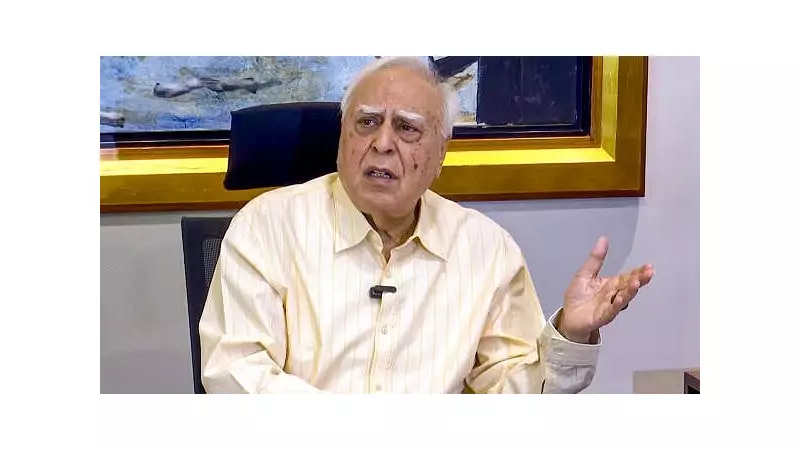
Senior politician and Rajya Sabha MP Kapil Sibal has launched a sharp critique against the ruling Bharatiya Janata Party (BJP), accusing it of failing to deliver on fundamental public goods despite being in power for over a decade. Sibal's remarks, made on Saturday, January 3, 2026, highlight a perceived neglect of critical issues like environmental pollution and social infrastructure.
A Decade of Unmet Promises on Environment and Health
In his pointed address, Sibal stated that the BJP government, which has been at the helm for eleven years, has failed in its fundamental duty to provide citizens with clean air and safe drinking water. He emphasised that these are not just policy goals but basic necessities for survival, where the administration's performance has been markedly lacking. The critique comes amid ongoing concerns in several Indian cities about deteriorating air quality and water scarcity issues.
Education and Healthcare Take a Backseat
Expanding his criticism, the former Union Minister asserted that the government has also not adequately focused on improving education and health standards across the country. Sibal argued that these core sectors, which directly impact human capital development and the quality of life for millions, have not received the sustained attention and investment they require for transformative change.

Alleged Fixation on Electoral Rolls
Contrasting this with the government's priorities, Sibal claimed that instead of addressing these pressing public welfare challenges, the current dispensation is fixated on cleaning the electoral rolls. This comment suggests a belief that political management is being prioritised over substantive governance and service delivery to the people. The statement implies a misalignment of administrative focus from developmental outcomes to electoral mechanics.
Sibal's assessment presents a stark evaluation of the BJP's long tenure, framing it as a period where essential services were overlooked. His comments are likely to fuel further political debate on the government's legacy and the opposition's narrative leading up to future electoral contests. The remarks underscore a growing political battle where the record on governance and development is set to be a central theme.