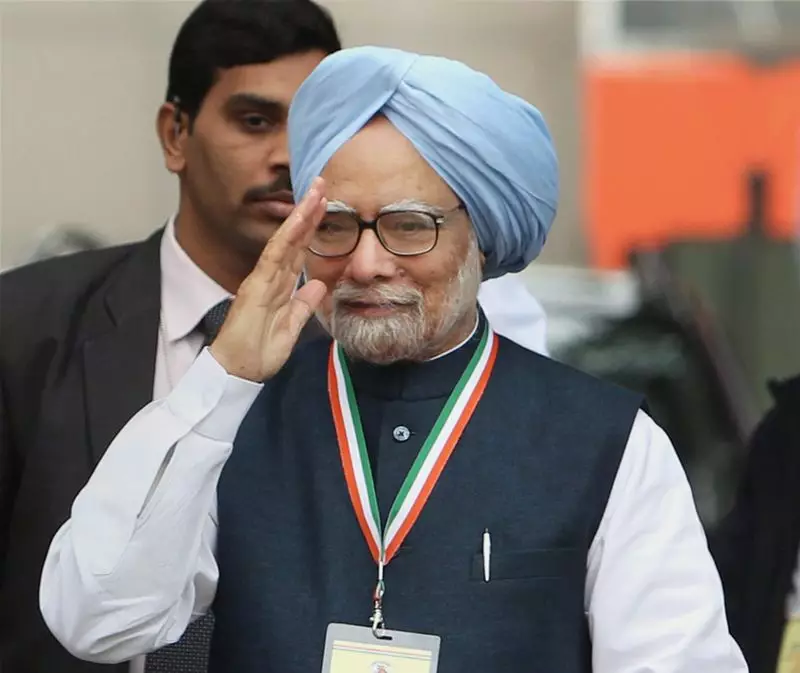
The Indian National Congress has unveiled a significant legislative proposal, the Shanti Act, which finds its philosophical roots in a powerful speech delivered nearly two decades ago by former Prime Minister Dr. Manmohan Singh. This proposed law aims to directly confront and criminalize organized political violence, marking a formal effort to translate Singh's enduring vision for a more civil and peaceful democratic discourse into actionable legal framework.
The Foundational Speech: A Legacy from 2005
The cornerstone of the Shanti Act is a landmark address given by Dr. Manmohan Singh on September 24, 2005. Speaking at a conference organized by the Hindustan Times, the then Prime Minister issued a stark warning about the dangers of violence creeping into the political arena. He explicitly condemned the use of force and intimidation as tools for political mobilization, emphasizing that such tactics posed a grave threat to the very foundations of India's democratic system.
In his speech, Singh articulated a principle that now forms the bedrock of the proposed act: political violence of any kind is unacceptable and must be met with the full force of the law. He argued that for democracy to thrive, differences must be resolved through debate and discussion, not through fear or coercion. This clarion call for peaceful political engagement, made almost 20 years ago, has been resurrected by the Congress as the guiding light for its new anti-violence legislation.

Key Provisions of the Proposed Shanti Act
The Shanti Act is designed as a comprehensive legal instrument to deter and punish organized violence for political ends. While the full draft is yet to be made public, key provisions highlighted by Congress leaders focus on creating strong deterrents. The act proposes to define and penalize organized political violence as a specific, serious criminal offense. This move seeks to close potential loopholes in existing laws that might not fully address the coordinated nature of such acts.
Furthermore, the legislation is expected to establish stricter accountability. It aims to hold not just the immediate perpetrators responsible but also those who plan, instigate, or finance such violent activities. The overarching goal is to create a legal environment where political parties and their supporters understand that inciting or participating in violence will lead to severe and unambiguous consequences.
Political Context and Motivations
The announcement of the Shanti Act comes at a time of heightened political polarization in India. The Congress party, by anchoring this proposal in the legacy of Dr. Manmohan Singh, a respected figure known for his sobriety and intellectual depth, is making a calculated political and philosophical statement. It positions the party as the guardian of democratic norms and peaceful political conduct, contrasting its approach with what it often labels as the aggressive tactics of its rivals.
This legislative push is also seen as an effort to reclaim and emphasize the Congress's historical commitment to pluralism and civil discourse. By invoking Singh's 2005 speech, the party connects its current agenda to a continuous thread of thought within its leadership, underscoring that the concern over political violence is not a recent reaction but a long-standing principle.
Potential Impact and the Road Ahead
If enacted, the Shanti Act could significantly alter the landscape of political confrontation in India. By providing a specific legal tool to address mob violence, hate speech aimed at inciting unrest, and targeted attacks during elections or protests, it could empower law enforcement agencies to act more decisively. Proponents believe it would protect ordinary citizens, activists, and political workers from becoming casualties of orchestrated violence.
However, the proposal is likely to face intense scrutiny and debate. Critics may question the necessity of a new law versus stricter enforcement of existing statutes like the Indian Penal Code. There will also be discussions about the potential for misuse and the precise definitions of what constitutes "organized political violence." The act's journey through Parliament, should it be tabled by a future government, will involve balancing the fundamental right to protest with the imperative to prevent violence.

In conclusion, the Shanti Act represents more than just a bill; it is an attempt to institutionalize a vision of peace articulated by Dr. Manmohan Singh. It seeks to move beyond rhetoric and create a tangible legal barrier against the weaponization of violence in politics. Whether it succeeds in becoming law or remains a powerful symbolic proposal, it has successfully sparked a necessary national conversation on preserving the sanctity and safety of India's democratic process.