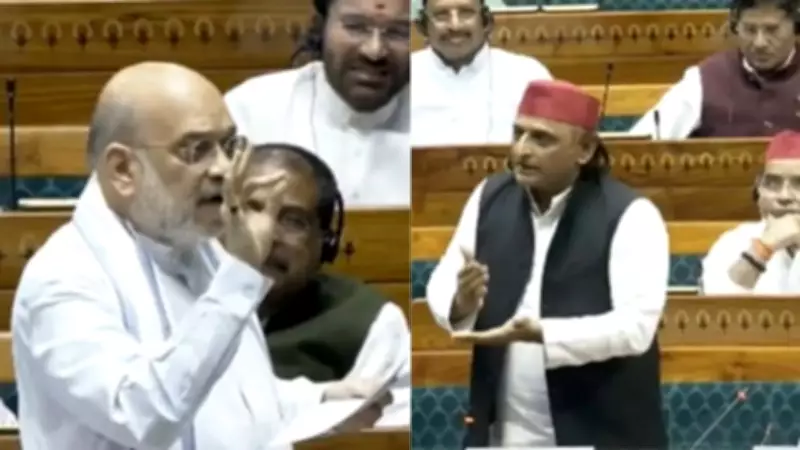
Amit Shah Proposes Parliamentary Pause for Delimitation Amendment
Union Home Minister Amit Shah made a significant proposal on Friday, suggesting that Lok Sabha proceedings be temporarily halted for one hour. This pause would allow him to introduce an official amendment aimed at increasing the number of parliamentary seats per state by 50% following the delimitation process.
Shah's Offer and Opposition's Immediate Rejection
During the parliamentary session, Shah stated, "If the reason to oppose this bill is that there should be 50% reservation, then halt the proceedings for an hour and I will bring an official amendment to this bill. But first, they (the opposition) need to promise to pass the bill." He emphasized that this amendment would ensure no state suffers a loss in representation.
However, Samajwadi Party chief Akhilesh Yadav swiftly rejected the offer. Yadav cited the ruling BJP's track record since 2014, expressing deep distrust. "Based on nearly 11 years of experience, even if the BJP were to give a written assurance that they would appoint a woman prime minister, we still would not trust them," Yadav added, highlighting the political tensions surrounding the issue.

Detailed Analysis of Seat Allocation Changes
Shah provided specific data to support his proposal, noting that five southern states—Karnataka, Andhra Pradesh, Telangana, Tamil Nadu, and Kerala—currently hold 129 out of 543 parliamentary seats, representing 23.76% of the total. Under the proposed 50% increase, these states would see their seat count rise to 195 in an expanded Lok Sabha of 816 seats, maintaining their share at 23.87%.
He argued that this adjustment would prevent any state from being disadvantaged, as the proportional representation would remain largely unchanged. This calculation is based on the assumption that delimitation would reallocate seats according to population data, with the total number of seats increasing significantly.
Opposition's Concerns Over Delimitation and Women's Reservation
Opposition parties have labeled the delimitation exercise as "dangerous," voicing strong objections. They argue that expanding the Lok Sabha from 543 to approximately 850 seats could diminish the relative political weight of southern, north-western, north-eastern, and other smaller states. This concern stems from the fact that seat allocation based on population growth might favor more populous states, potentially marginalizing regions that have successfully controlled population growth.
Furthermore, the opposition has linked this issue to women's reservation, demanding immediate implementation of the 33% quota based on the current strength of 543 seats, in accordance with Article 334A passed in 2023. They contend that since the provision mandates the quota to take effect after delimitation based on the 2027 Census, the process could be expedited using fresh census data before the 2029 general elections.
Critics have also pointed out the government's reliance on the older 2011 Census for delimitation, arguing that this outdated data does not reflect current demographic realities. They urge for updated statistics to ensure fair and accurate representation in Parliament, emphasizing the need for transparency and equity in the electoral process.
Broader Implications and Political Standoff
The debate over delimitation and women's reservation has escalated into a major political standoff, with both sides holding firm to their positions. The opposition's refusal to trust the BJP's assurances adds a layer of complexity to the negotiations, potentially stalling legislative progress.
As discussions continue, the focus remains on balancing regional representation with national interests, ensuring that any changes to parliamentary structure uphold democratic principles and fairness for all states. The outcome of this dispute could have lasting impacts on India's political landscape and electoral framework.