Seers and Saints at Magh Mela Voice Strong Opposition to New UGC Bill
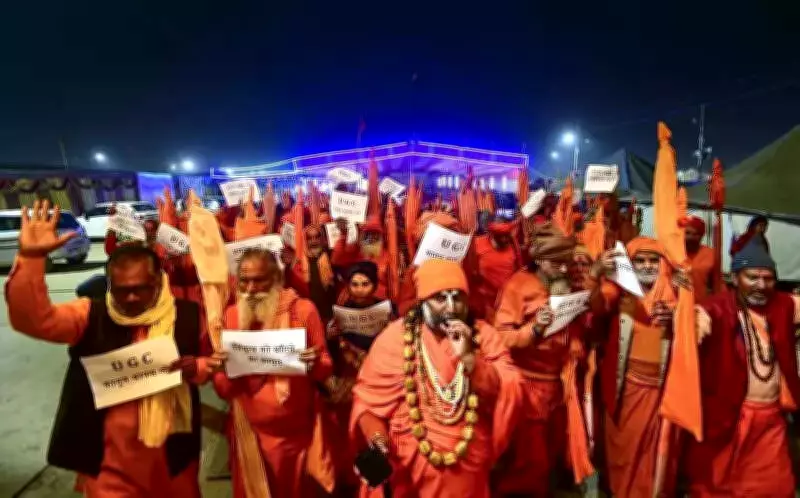
The recently introduced UGC Bill has ignited significant discontent, reaching even the spiritual heart of India at the Magh Mela in Prayagraj. Religious entities and seers from across the nation, gathered at the sacred banks of Sangam, have raised their voices in a unified demand for the BJP-led Union government to immediately withdraw the controversial legislation.
Concerns Over Societal Division and Hindu Unity
During a conference held at the camp, prominent spiritual leaders expressed deep concerns about the potential impacts of the bill. Jagadguru Swami Narendranand Saraswati Maharaj highlighted that the new UGC bill could create a rift in society and drive a wedge among Hindus, undermining the fabric of communal harmony.
Echoing these sentiments, Pithadheeshwar Swami Brahmashram, the national president of the All India Dandi Sanyasi Parishad, condemned the bill as unjust. He demanded not only its withdrawal but also called for punitive actions against those who drafted it, accusing them of conspiring to divide India.

Calls for Cow Protection and Unity Against the Bill
Jagadguru Swami Ghanshyamacharya Maharaj emphasized the importance of cow protection, urging that reliance should not be placed solely on the government. He stated that every individual must resolve to contribute to this cause, asserting that the roots of Sanatan dharma are deep and that anyone attempting to end it would face destruction. He firmly opposed the new UGC bill and appealed for unity in resisting it.
Further strengthening the opposition, Jagadguru Swami Krishnacharya Maharaj of Rishikesh linked cow protection to national security, describing it as akin to protecting the nation itself. Jagadguru Narayanacharya Swami Shandilya Maharaj cautioned the government against taking divisive steps that could adversely affect the lives of youth, urging an immediate withdrawal of the UGC bill.
Broader Implications and Demands
The collective anguish among the seers and saint community at Magh Mela underscores a broader unease with the bill's provisions. Their protests highlight fears that the legislation might not only impact educational frameworks but also stir social and religious tensions. The demand for swift government action reflects a growing call for policies that foster unity rather than division.
As the debate intensifies, the voices from Prayagraj serve as a poignant reminder of the deep-seated connections between policy decisions and societal cohesion in India.