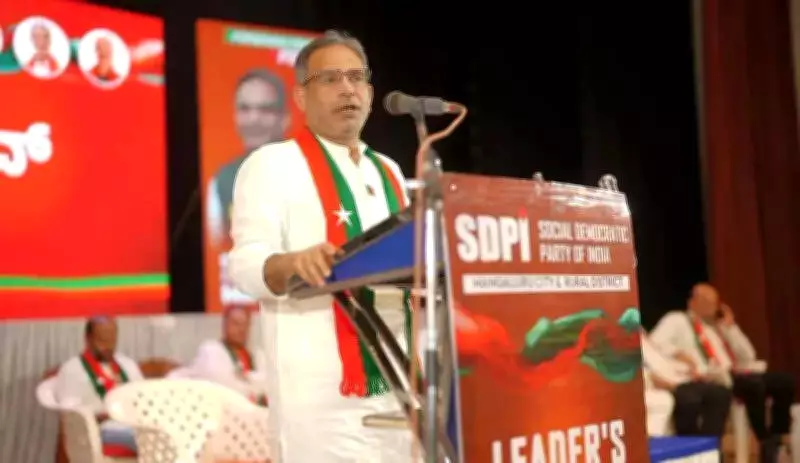
Mangaluru: MK Faizy, national president of the Social Democratic Party of India (SDPI), stated that opposition parties, including the Congress, lack a clear and consistent strategy to counter what he described as the BJP's 'anti-people' tactics to retain power. He made these remarks during a leaders' conclave at the Indiana Convention Centre in Mangaluru on Tuesday.
Three-Pronged Strategy Alleged
Faizy criticized the BJP's governance style, alleging that the party employs a three-pronged approach to stay in power. First, he claimed the BJP targets a particular community with an anti-Muslim narrative for political gain. Second, he alleged misuse of the country's economic resources to consolidate political dominance. Third, he accused the party of misusing central investigative agencies to suppress dissent.
Criticism of Opposition Parties
Faizy further criticized opposition parties such as the Samajwadi Party and the All India Trinamool Congress, stating that their alliances are largely limited to election periods and that they fail to strongly oppose what he termed unconstitutional laws introduced by the BJP. He also accused some opposition leaders of joining the BJP for power, and alleged that the Congress treats Muslims merely as a vote bank without adequately addressing their concerns during crises.

SDPI's Expanding Presence
Faizy said minorities in the country are becoming increasingly aware of their political strength, and claimed that the SDPI is expanding its presence, particularly in BJP-ruled states. He expressed confidence that the party is emerging as a significant national political force.
Call for Collective Action
'Defeating the BJP is not the responsibility of a single party, but a collective responsibility of all opposition parties. Politics should go beyond criticism or the pursuit of power,' he said. He emphasized that real development must be measured by access to education, employment, and quality healthcare for even the most marginalized sections. He urged minorities and backward communities to move beyond being treated as vote banks and to actively participate in decision-making processes.