

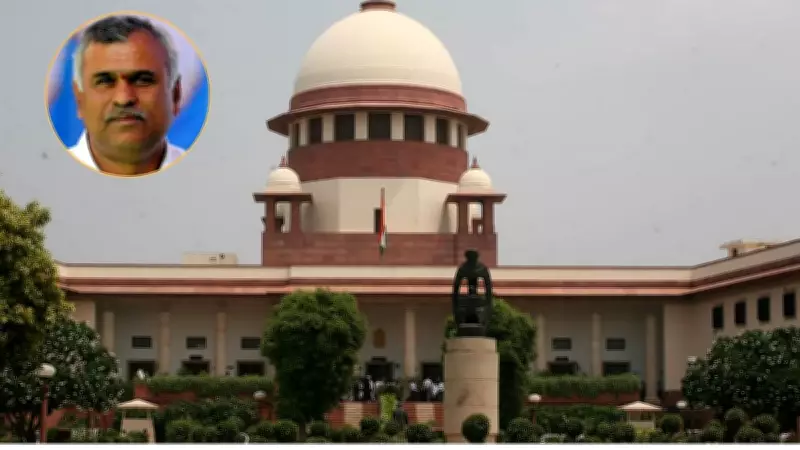
Supreme Court Confirms Congress MLA Nanjegowda's Election Victory in Karnataka's Malur Constituency
In a significant ruling, the Supreme Court of India has upheld the election of Congress MLA Nanjegowda from the Malur constituency in Karnataka. The court's decision comes after a thorough review of the electoral process, including a detailed recount of votes, which ultimately affirmed Nanjegowda's victory.
Vote Recount Results and Final Tally
The Supreme Court found that even after conducting a meticulous recount, Nanjegowda emerged as the clear winner. According to the court's findings, Nanjegowda secured a total of 50,957 votes, while his closest rival, Manjunath Gowda of the Bharatiya Janata Party (BJP), received 50,707 votes. This narrow margin of victory underscores the competitive nature of the election in the Malur constituency.
Implications for Karnataka Politics
This ruling has important implications for the political landscape in Karnataka. By upholding Nanjegowda's election, the Supreme Court has provided clarity and stability in the representation of the Malur constituency. The decision reinforces the integrity of the electoral process and sets a precedent for handling similar disputes in the future.

The case highlights the critical role of judicial oversight in ensuring fair elections, especially in closely contested seats. It also reflects the ongoing political dynamics between the Congress and BJP in Karnataka, a state known for its vibrant and often contentious political environment.
Background and Context of the Election Dispute
The election for the Malur constituency was part of the broader Karnataka assembly elections, which saw intense competition between major political parties. Nanjegowda's victory was initially challenged, leading to a legal battle that culminated in the Supreme Court's intervention. The recount was ordered to address allegations of discrepancies in the vote count, but the final results confirmed the original outcome.
This ruling not only validates Nanjegowda's mandate but also serves as a reminder of the importance of transparent electoral procedures. It underscores how legal mechanisms can resolve disputes and uphold democratic principles, ensuring that the will of the people is accurately reflected in election results.






