

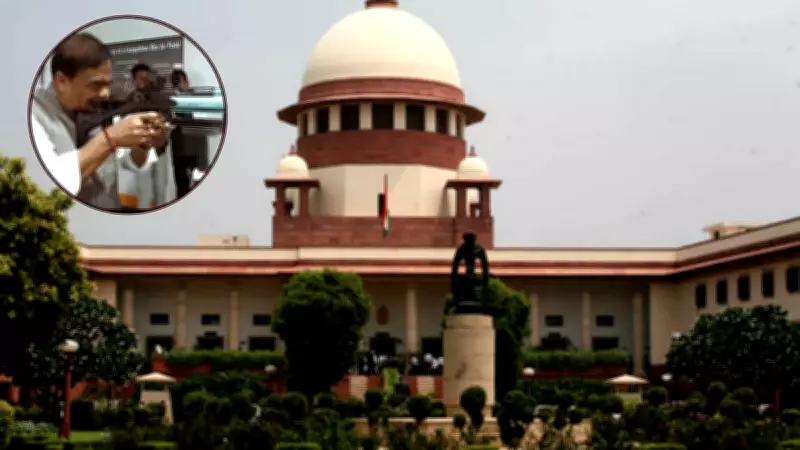
Supreme Court Accepts Plea from Left Leaders Against Assam Chief Minister
The Supreme Court of India has formally agreed to hear a significant petition filed by leaders of the Communist Party of India (Marxist) and the Communist Party of India against Assam Chief Minister Himanta Biswa Sarma. The plea centers on a contentious video that allegedly depicts the Chief Minister making inflammatory remarks about "shooting," which the petitioners argue constitutes a serious threat to public order and democratic norms.
CJI's Remarks on Election Season Litigation
During the proceedings, Chief Justice of India D.Y. Chandrachud made a pointed observation, stating, "The problem is, as soon as elections come, part of the election is fought in the Supreme Court." This comment underscores the court's awareness of how political disputes frequently migrate to the judicial arena during electoral periods, highlighting the broader context of this case within India's vibrant democracy.
Background of the Controversial Video
The video in question, which has circulated widely on social media and news platforms, purportedly shows CM Himanta Biswa Sarma delivering a speech where he uses language interpreted by the Left leaders as advocating violence. The petitioners, representing CPI(M) and CPI, have raised concerns that such rhetoric could incite unrest and undermine the rule of law in Assam, a state with a complex socio-political landscape.

Key aspects of the plea include:
- Allegations that the video violates constitutional principles of free speech by crossing into hate speech territory.
- Demands for an investigation into the context and authenticity of the video footage.
- Calls for legal action against the Chief Minister if the claims are substantiated.
Political Implications and Reactions
This development occurs against the backdrop of heightened political activity in India, with elections looming on the horizon. The Left parties, which have a historical presence in certain regions of Assam, view this legal move as a crucial step in holding elected officials accountable. Meanwhile, supporters of CM Sarma argue that the video is being misinterpreted and that the plea is politically motivated, aimed at tarnishing his image ahead of electoral contests.
The Supreme Court's decision to hear the case signals its willingness to address sensitive political matters that intersect with legal and ethical boundaries. As the proceedings unfold, they are expected to draw significant attention from political analysts, legal experts, and the public, potentially setting precedents for how similar cases are handled in the future.
In summary, the Supreme Court's acceptance of this plea marks a pivotal moment in the ongoing discourse around political speech and accountability in India, with the CJI's remarks adding a layer of reflection on the judicial system's role during election seasons.






