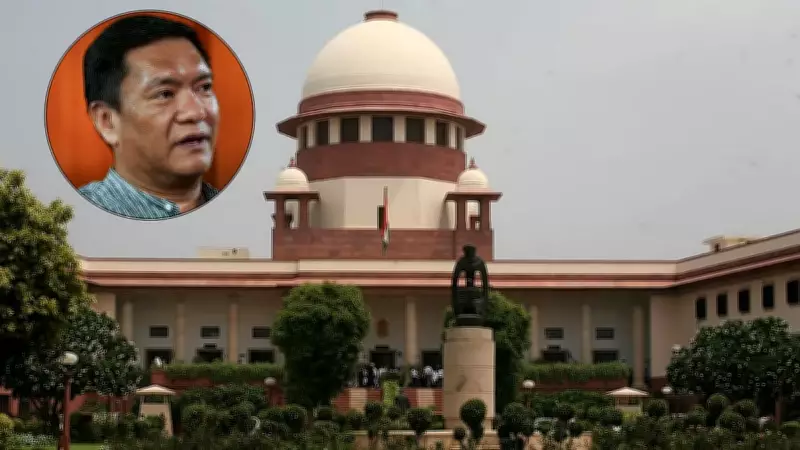
Supreme Court Reserves Judgment on CBI Investigation Into Arunachal Pradesh Chief Minister's Family Contracts
The Supreme Court of India has reserved its order on a significant petition that demands a Central Bureau of Investigation (CBI) probe into government contracts awarded to relatives of Arunachal Pradesh Chief Minister Pema Khandu. This development follows intense legal arguments presented before the bench, highlighting allegations of potential impropriety in the allocation of state contracts.
Details of the Affidavit and Contract Allegations
During the proceedings, the petitioner referenced a crucial affidavit filed in July 2025, which provided a comprehensive summary of contracts granted over an 11-year period. According to this document, a total of 31 government contracts were awarded to Brand Eagles, a company owned by the chief minister's wife. The affidavit meticulously outlines the scope and value of these contracts, raising serious questions about transparency and fairness in the procurement process.
The petitioner argued that these contracts warrant a thorough investigation by the CBI to ascertain whether any rules or ethical guidelines were violated. The legal team emphasized the need for an independent probe to ensure accountability and maintain public trust in governance.
Legal Proceedings and Arguments
The Supreme Court bench heard extensive submissions from both sides before deciding to reserve its order. The petitioner's counsel contended that the sheer number of contracts—31 over more than a decade—to a single entity linked to the chief minister's family necessitates a deeper inquiry. They stressed that such patterns could indicate preferential treatment or conflicts of interest, which undermine democratic principles.
On the other hand, representatives for the Arunachal Pradesh government and Chief Minister Pema Khandu likely defended the contracts as lawful and merit-based, arguing that they were awarded through proper channels and in compliance with all regulations. However, the court's decision to reserve the order suggests it is carefully weighing the evidence and legal precedents before issuing a ruling.
Implications for Governance and Politics in Arunachal Pradesh
This case has far-reaching implications for the political landscape of Arunachal Pradesh and broader governance standards in India. If the Supreme Court orders a CBI probe, it could lead to a detailed examination of contract allocation practices in the state, potentially uncovering irregularities or setting new benchmarks for transparency.
The outcome may also influence public perception of Chief Minister Pema Khandu's administration, especially ahead of upcoming elections or policy decisions. It underscores the critical role of judicial oversight in checking executive power and ensuring that public resources are managed without bias or favoritism.
Next Steps and Expected Timeline
With the order reserved, the Supreme Court is expected to deliver its judgment in the coming weeks or months. Legal experts anticipate that the court will either dismiss the plea, direct a CBI investigation, or possibly recommend alternative measures such as an internal audit or a special committee review.
Stakeholders, including political observers, anti-corruption activists, and the general public, are closely monitoring this case. The decision could serve as a precedent for similar allegations involving government contracts and familial connections in other states, reinforcing the judiciary's commitment to upholding integrity in public office.
As the legal process unfolds, this case highlights the ongoing challenges in balancing administrative discretion with accountability, and the vital need for robust mechanisms to prevent misuse of power in India's democratic framework.