Sanatan Traditions and Secularism: A National Debate Rekindled
The core tenets of Sanatan Dharma, encompassing faith, morality, and tradition, have once again surged to the forefront of India's national discourse, igniting a fiery debate on the practical application of secularism. This complex conversation is fueled by a series of recent controversies that challenge the boundaries between religious practice, state administration, and constitutional principles.
The Haridwar Ghats Entry Ban and Shrine Administration Row
At the heart of the debate lies the contentious issue of non-Hindu entry at certain Haridwar ghats, a move that has sparked intense discussions on religious exclusivity versus universal access. Parallel to this, significant questions are being raised regarding the funding and administrative control of prominent shrines. These incidents have collectively heightened public emotions and prompted a deeper examination of governance in religious spaces.
HS Rawat's Analysis: Turkman Gate and Vaishno Devi
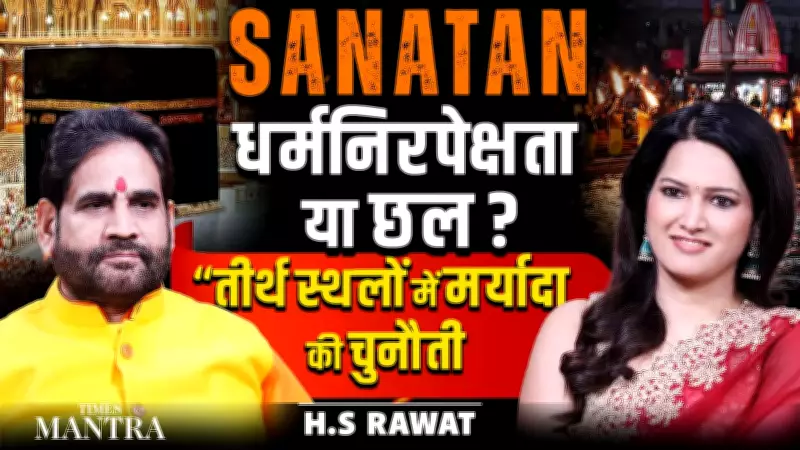
Political analyst HS Rawat provides crucial context to the unfolding narrative by dissecting two pivotal cases. He delves into the historical and contemporary nuances of the Turkman Gate mosque issue, alongside the ongoing controversies surrounding the Vaishno Devi shrine board. Rawat's fact-based explanation aims to move beyond surface-level arguments, offering a grounded perspective on these sensitive matters.

The Core Question: Uniform Secularism or Selective Application?
This multifaceted discussion inevitably spirals into a larger, more profound inquiry: Is the principle of secularism being upheld uniformly across India, or is it being applied in a selective manner? The debate forces a critical examination of where personal and collective faith should end and where the mandates of constitutional morality must begin. It is a sharp, necessary conversation about belief systems, societal boundaries, and the continuously evolving interpretation of secularism within the Indian framework.
Faith, Morality, and the Constitutional Framework
The intersection of Sanatan faith with state policy raises essential questions about religious freedom and national identity. As emotions run high, the discourse challenges citizens and policymakers alike to reflect on the balance between preserving cultural and religious traditions and adhering to the secular, democratic ideals enshrined in the Indian Constitution. This national debate is not merely about specific incidents but about defining the very character of India's pluralistic society.