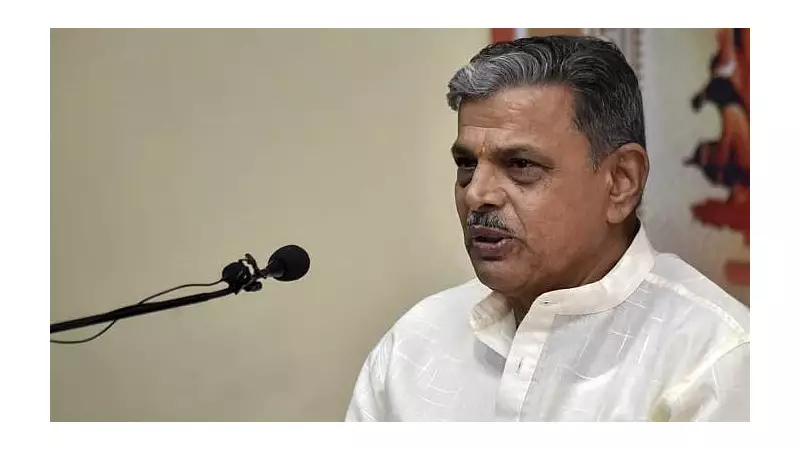
In a significant address marking the Rashtriya Swayamsevak Sangh's centenary year, senior leader Dattatreya Hosabale emphasised the importance of a unifying 'human religion' while affirming the freedom of individual faith. The speech was delivered at a public meeting in Khalilabad town, where Hosabale linked personal spiritual choices to national duty.
Core Message: Unity in Diversity and National Duty
Dattatreya Hosabale, the Sarkaryavah (General Secretary) of the RSS, articulated a vision where the freedom to follow any religion is respected, but not at the expense of a broader common humanity. He stated that people are free to follow any faith, but they should give priority to 'human religion'. This concept, he suggested, forms the bedrock of social harmony and collective progress.
Hosabale connected this philosophical stance to contemporary national realities. He pointed out that India's global standing has risen significantly in recent times. This enhanced position on the world stage, according to him, brings with it a corresponding responsibility for every citizen.
Call for Comprehensive National Strengthening
Building on his observation of India's growing influence, the RSS leader issued a clear call to action. He asserted that it is now the fundamental duty of all citizens to strengthen the nation in every sector. This holistic view of development implies contributions beyond the political or social spheres, extending to economic, technological, and cultural domains.
The event was part of the ongoing RSS centenary year programme, a series of initiatives and gatherings commemorating 100 years of the organisation's existence. The choice of Khalilabad, a town in Uttar Pradesh's Sant Kabir Nagar district, for this message underscores the RSS's outreach across India's vast geography.
Context and Implications
Hosabale's remarks arrive at a pivotal moment for the organisation and the nation. The centenary year is a period of reflection and projection for the RSS, aiming to present its vision for the future. The speech subtly frames national strength as an outcome of internal unity, where diverse religious identities coalesce around a shared humanistic ethos and a common goal of nation-building.
By linking spiritual freedom with civic duty, the address seeks to present a balanced perspective. It acknowledges India's pluralistic fabric while urging a unifying principle that transcends individual differences. The underlying message is clear: India's continued ascent depends as much on internal cohesion as on external achievements.