

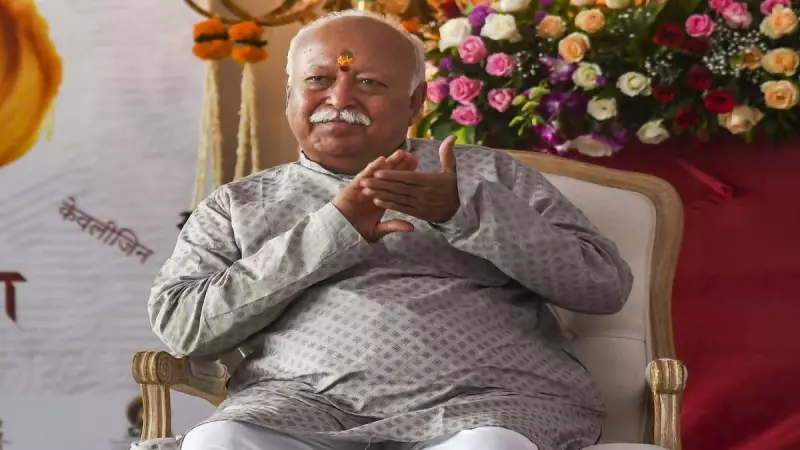
In a significant address that has sparked widespread discussion, Rashtriya Swayamsevak Sangh (RSS) chief Mohan Bhagwat outlined a multi-pronged societal approach to counter the phenomenon often referred to as 'love jihad'. Speaking at the concluding ceremony of the RSS's annual officers' training camp in Nagpur on January 4, 2026, Bhagwat stressed that the solution lies not in aggressive confrontation but in strengthening family bonds, empowering women, and fostering vigilant communities.
The Core of Bhagwat's Argument: Dialogue and Empowerment
Mohan Bhagwat, the Sarsanghchalak of the RSS, placed strong emphasis on the role of the family unit as the first line of defense and understanding. He argued that open and continuous communication within families is crucial. When family members, especially parents and children, maintain a healthy and trusting dialogue, young individuals are better equipped to make informed decisions and are more likely to seek guidance when faced with complex situations.
Closely linked to this is the principle of women's empowerment. Bhagwat asserted that educating and empowering women socially, economically, and intellectually is a fundamental step. A woman who is confident, aware of her rights, and capable of independent thought is inherently more resilient to any form of manipulation or coercion. This empowerment, he suggested, should be a core societal goal that renders external protectionist narratives less central.

The Role of Societal Vigilance and Collective Responsibility
Moving beyond the family, the RSS chief highlighted the importance of societal vigilance. He called for communities to be aware and attentive to the activities happening around them. This vigilance, however, was framed not as a call for suspicion or hostility, but as a collective responsibility for the well-being of all community members. It is about fostering an environment where harmful patterns can be identified and addressed through social mechanisms before they escalate.
Bhagwat's address subtly shifted the focus from solely targeting an external phenomenon to fortifying internal social structures. The underlying message was that a society with strong familial foundations, educated and empowered women, and a caring community is naturally resistant to divisive tactics and exploitation in any form.
Context and Implications of the Statement
The term 'love jihad' is a controversial and politically charged phrase used by some right-wing groups to allege a conspiracy where Muslim men purportedly lure Hindu women into marriage for religious conversion. The concept has been a polarizing issue in Indian socio-political discourse and has even influenced legislation in several states.
By advocating for family dialogue and women's empowerment as primary solutions, Mohan Bhagwat's remarks present a nuanced stance. While acknowledging the concerns of his ideological constituency, he steers the conversation towards constructive, long-term social building rather than short-term confrontation. This approach seeks to address the anxiety felt by some sections while promoting social cohesion and strength from within.
His speech at the RSS camp in Nagpur, an annual event that sets the tone for the organization's yearly activities, indicates that this perspective is meant to guide the swayamsevaks in their grassroots work. It underscores a strategy that prioritizes social reform and vigilance over purely political or legislative measures.
In conclusion, Mohan Bhagwat's address on January 4, 2026, reframes the discourse on 'love jihad' by placing the onus on Hindu society itself to build resilience. The roadmap he proposes is built on three pillars: robust intra-family communication, comprehensive empowerment of women, and a responsibly vigilant community. This stance is likely to influence the ongoing national conversation on the issue, emphasizing preventive social strength over reactive measures.






