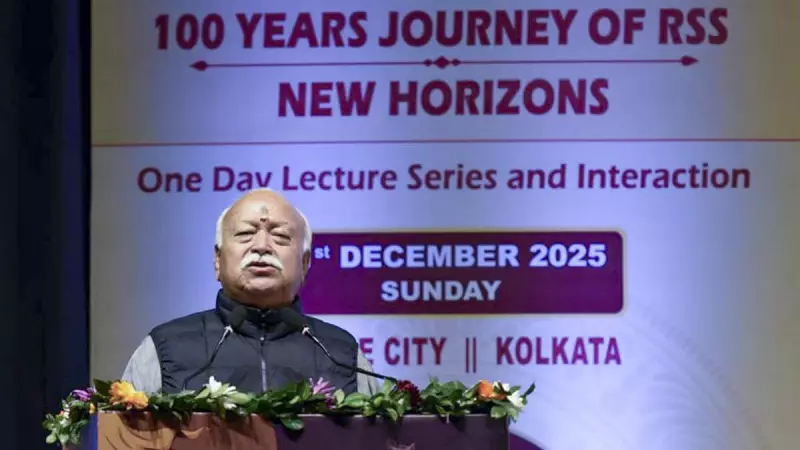
In a significant address that has drawn widespread attention, Rashtriya Swayamsevak Sangh (RSS) chief Mohan Bhagwat has issued a clarion call for unity among the Hindu community, with a specific focus on the eastern regions of West Bengal and neighbouring Bangladesh. The Sarsanghchalak's remarks, delivered during a key organisational event, underscore a strategic push for social and cultural consolidation in a region with a complex demographic and political landscape.
The Core Message: Consolidation and Identity
Mohan Bhagwat articulated the need for Hindus to strengthen their internal bonds and organisational structure. He stressed that a unified and organised Hindu society is essential for preserving its cultural heritage and values. The RSS chief's comments were not made in isolation but were directed at the specific context of West Bengal and Bangladesh, areas where the Hindu population has witnessed notable demographic shifts and faces distinct socio-political challenges.
Bhagwat's address highlighted concerns about the community's future in these regions. He pointed to the importance of maintaining cultural continuity and social cohesion amidst changing circumstances. The call for unity is seen as a move to bolster the community's resilience and ensure its active participation in the broader societal framework.

Regional Focus: West Bengal and Bangladesh
The specific mention of West Bengal and Bangladesh adds a crucial geographical dimension to his appeal. In West Bengal, the Hindu community constitutes a majority but has been at the centre of intense political discourse, especially concerning migration and cultural identity. Bhagwat's call is interpreted by observers as an effort to galvanise the community ahead of significant political milestones and to address perceived vulnerabilities.
Regarding Bangladesh, the context is markedly different. Hindus are a minority in the Muslim-majority nation, and issues related to their security, property rights, and religious freedom have been persistent points of discussion in bilateral relations. By extending his message to Bangladesh, Bhagwat is amplifying a pan-regional concern for Hindu welfare that transcends international borders, framing it as a matter of civilisational and cultural solidarity.
Implications and Political Resonance
The timing and content of Mohan Bhagwat's speech carry substantial political weight. As the ideological mentor of the ruling Bharatiya Janata Party (BJP) and its broader Sangh Parivar, his statements often set the tone for larger socio-political movements. The emphasis on Hindu unity in West Bengal is viewed as a direct intervention in the state's charged political arena, where the BJP has been striving to expand its footprint.
Furthermore, his reference to Bangladesh is likely to resonate in the domain of foreign policy and diaspora engagement. It underscores the RSS's view of the Hindu community as a cohesive entity that exists beyond national boundaries, linked by shared faith and culture. This perspective often informs diplomatic dialogues concerning the treatment of minority communities in neighbouring countries.
Critics argue that such calls for religious community-based consolidation can deepen societal fractures. However, supporters contend that it is a necessary measure for the protection and empowerment of a community facing unique pressures in the region.
In conclusion, RSS Sarsanghchalak Mohan Bhagwat's appeal for Hindu unity in West Bengal and Bangladesh is a multifaceted statement. It operates on social, cultural, and political levels, aiming to inspire internal strength within the community while inevitably influencing the broader geopolitical discourse in South Asia. The address reaffirms the RSS's enduring focus on Hindu solidarity as a cornerstone of its ideology, with a clear-eyed focus on specific regional theatres where this solidarity is deemed most vital.