

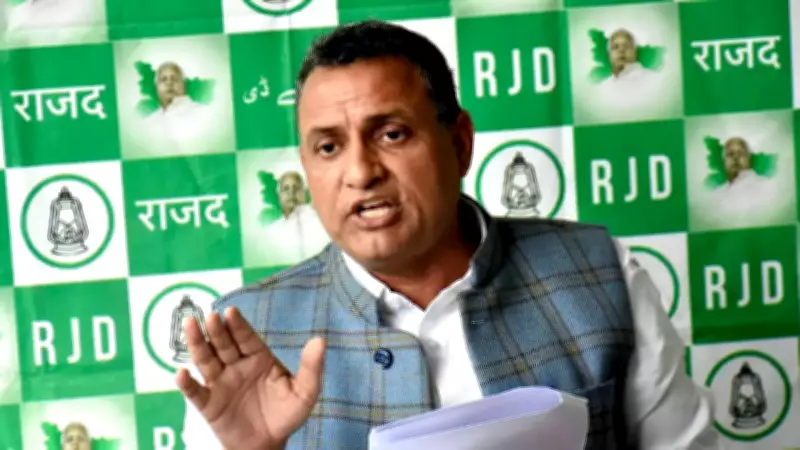
RJD MP Demands Urgent Review of Ethanol Allocation Policy to Protect Bihar's Industry
RJD Member of Parliament from Buxar, Sudhakar Singh, has made a fervent appeal to the Central Government, urging an immediate and comprehensive review of the national ethanol allocation policy. The MP's call to action comes amid growing concerns over the potential closure of multiple ethanol production facilities across Bihar, including the significant Bharat Plus Ethanol Plant located in Nawanagar, Buxar district.
Broken Promises and Industrial Development at Stake
In a detailed statement issued on Friday, Singh emphasized that Bihar's entire ethanol sector was developed based on explicit assurances and policy directives from both Central and state governments. These assurances were specifically designed to promote industrialization and foster ethanol-based industries as a cornerstone of economic growth in the region.
Acting on these governmental promises, substantial private investments were mobilized, leading to the establishment of 16 operational ethanol plants across Bihar. This industrial base comprises eight grain-based facilities and an additional eight plants integrated with sugar mills. Furthermore, plans were in advanced stages for nine more proposed plants, indicating significant forward momentum in the sector.

The MP highlighted that these ventures represented investments totaling hundreds of crores of rupees. Crucially, they generated direct employment for thousands of local youths, providing stable livelihoods and curbing the historical trend of outward migration from the state.
Policy Shifts Threaten Plant Viability and Jobs
However, Singh pointed to a dramatic and detrimental shift in policy implementation during the recent 2025-26 annual ethanol procurement tender issued by public sector oil marketing companies (OMCs). The MP asserted that these companies significantly reduced allocated procurement volumes for dedicated ethanol plants while simultaneously downgrading their priority status in the supply chain.
An additional and highly contentious new condition was introduced, mandating that 40% of ethanol production must be sourced from rice supplied by the Food Corporation of India (FCI). Singh stressed that this stipulation was never part of the original agreements or policy frameworks under which investors committed their capital.
Direct Impact: Plant Closures and Mass Layoffs
The practical consequences of these policy changes have been severe and immediate. Singh cited the case of the Bharat Plus Ethanol Plant in Nawanagar, which boasts an annual production capacity of 36,500 kiloliters (KL).
Due to the reduced allocation in the tender, the plant was allotted a mere 16,299 KL, effectively rendering its operations economically unviable. This drastic shortfall forced the plant management to suspend all operations starting January 24, 2026.
The human cost has been devastating. Approximately 250 workers were placed on indefinite temporary leave, while a further 450 employees faced permanent job losses. Singh warned that this is not an isolated incident but a prevailing condition threatening ethanol plants statewide, pushing a newly employed workforce back towards the brink of migration.
Undermining Policy Credibility and Industrial Future
The RJD parliamentarian argued that weakening the ethanol sector strikes at the very credibility of government industrial policy. He noted that the integrated model, particularly for sugar industries, is no longer financially viable without consistent and supportive ethanol production linkages.
Singh concluded that the current trajectory of policy decisions runs directly contrary to the government's stated objectives of promoting industrialization, generating employment, and achieving energy security through biofuels. His appeal underscores a critical juncture for Bihar's agro-industrial economy and the livelihoods of thousands dependent on it.






