

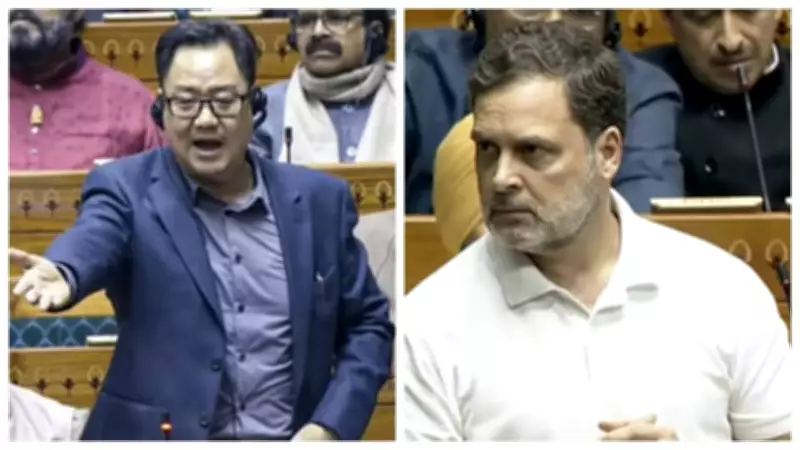
Kiren Rijiju Details Modi Government's Strategic Pause on Privilege Notice Against Rahul Gandhi
In a significant development within India's parliamentary proceedings, Union Parliamentary Affairs Minister Kiren Rijiju has provided a detailed explanation for the Modi government's decision to temporarily halt a proposed privilege motion against Congress leader Rahul Gandhi. This move comes amidst heightened political tensions following BJP MP Nishikant Dubey's submission of a substantive motion seeking Gandhi's expulsion from the House.
Background of the Controversy and Dubey's Intervention
The controversy erupted when Rahul Gandhi, during his Budget speech, referenced an unpublished memoir by former Army Chief General MM Naravane to criticize Prime Minister Narendra Modi regarding the 2020 India-China standoff. The government swiftly objected to these remarks, labeling them as a clear violation of established House rules and parliamentary decorum. In response, BJP MP Nishikant Dubey took decisive action by filing a formal motion that calls for Gandhi's expulsion, thereby escalating the political confrontation.
Kiren Rijiju emphasized that the Centre has opted to shelve its initial privilege notice for the time being, citing Dubey's motion as a more substantive and procedurally appropriate step. This strategic pause allows the parliamentary process to unfold through established channels, rather than pursuing a parallel action that could complicate matters.

Parliamentary Procedures and Next Steps
Rijiju clarified the procedural pathway ahead, stating that once Speaker Om Birla admits Dubey's motion, the matter will be directed to the appropriate parliamentary committee for thorough examination. The options include referring it to the Privileges Committee, the Ethics Committee, or placing it directly before the full House for debate and decision-making.
Key points outlined by Rijiju include:- The government's decision to pause the privilege notice is a tactical move to avoid procedural overlaps.
- Dubey's motion is considered more comprehensive, addressing broader concerns about conduct in Parliament.
- The Speaker's role is pivotal in determining the committee referral, ensuring impartial handling of the issue.
- This approach aims to uphold parliamentary norms while addressing alleged breaches by Gandhi.
Political Implications and Ongoing Tensions
The political temperature remains exceptionally high as both the ruling BJP and opposition Congress brace for the next phase of this confrontation inside Parliament. This episode underscores the intense partisan dynamics at play, with each side positioning itself strategically ahead of potential debates and committee hearings.
Analysts suggest that the Modi government's pause on the privilege notice reflects a calculated effort to maintain procedural integrity while keeping pressure on the opposition. By allowing Dubey's motion to take precedence, the government avoids accusations of overreach and aligns with parliamentary best practices.






