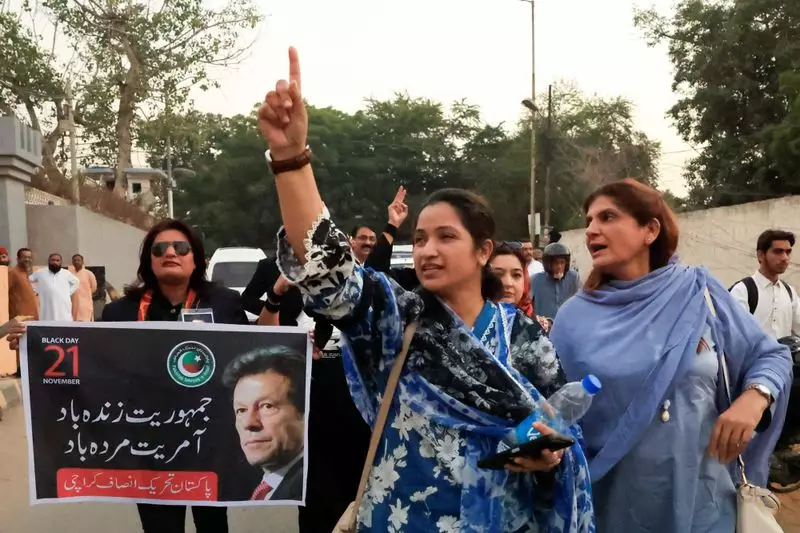
Tensions are escalating in Pakistan's political landscape as the city of Rawalpindi braces for major demonstrations planned by the Pakistan Tehreek-e-Insaf (PTI). The catalyst for this fresh wave of unrest is the ongoing concern over the health and detention conditions of the party's founder and former Prime Minister, Imran Khan.
Authorities Clamp Down with Section 144
In a pre-emptive move to maintain public order, the district administration of Rawalpindi has imposed Section 144 of the Criminal Procedure Code across the entire district. This legal order, effective immediately, prohibits all forms of public gatherings, protests, and processions. The decision was officially confirmed by a spokesperson for the Rawalpindi police on Saturday, February 24, 2024.
The police spokesperson explicitly stated that no permission would be granted for any rally or protest. The authorities have justified this stringent measure as necessary to prevent any potential disturbance to peace and to safeguard public life and property. This move effectively aims to block the PTI's announced plans for what they term "mega protests."
PTI's Defiant Stance and Health Concerns for Imran Khan
Despite the official ban, leaders of the PTI have signaled a defiant stance. Senior party figures have indicated their intention to move forward with their protest plans, setting the stage for a potential confrontation with law enforcement agencies. The core grievance driving the planned protests revolves around the health of Imran Khan.
Khan, who has been incarcerated since August of the previous year following his conviction in the Toshakhana corruption case, has reportedly been facing health issues. His party members and legal team have consistently raised alarms about his well-being while in prison. The PTI alleges that Khan is not receiving adequate medical care and that his detention conditions are a matter of serious concern. These protests are framed as a necessary public response to what the party calls the injustice and neglect faced by their leader.
Security Tightened Across Rawalpindi
In anticipation of the protests, a significant security blanket has been thrown over Rawalpindi. Police and other security forces have been deployed in strength at all major entry and exit points of the city, as well as at sensitive locations. The objective is to physically prevent protesters from assembling and to monitor the movement of individuals and groups.
Checkpoints have been established on all roads leading into Rawalpindi, with personnel conducting rigorous checks on vehicles and individuals. This security surge underscores the administration's determination to enforce the ban on gatherings and avoid any large-scale public demonstration that could spiral into unrest.
Broader Political Implications and Potential Fallout
This latest development marks another chapter in the prolonged political crisis that has gripped Pakistan since Imran Khan's ouster from power via a parliamentary vote of no-confidence in April 2022. The repeated use of Section 144 to curb PTI's political activities has been a point of contention, with the party accusing the state of suppressing democratic dissent.
The standoff in Rawalpindi is more than a local law-and-order issue; it is a microcosm of the deep political polarization in the country. The PTI's ability to mobilize its supporters in the face of official bans is a test of its street power, while the government's response reflects its strategy to manage political opposition. The situation remains fluid, with the potential for escalation if the PTI decides to challenge the restrictions directly.
The coming days will be critical in determining whether the protests materialize and how the authorities respond to any attempts to defy the imposed Section 144. The health of Imran Khan continues to be a potent rallying point for his supporters, ensuring that political temperatures in Pakistan remain high.