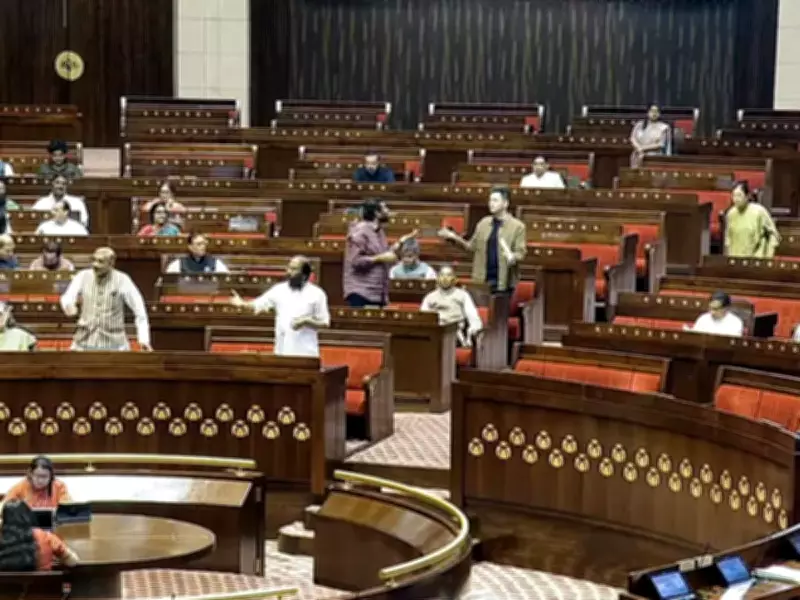
Rajya Sabha Elections 2026: Polling Commences for 11 Contested Seats
The biennial Rajya Sabha elections for 2026 have officially begun, with polling underway for 11 seats across multiple states. This crucial electoral process is set to fill a total of 37 seats in the Upper House of Parliament, with terms expiring in April.
Key Candidates and State-wise Breakdown
Among the prominent figures in the fray are Bihar Chief Minister Nitish Kumar and BJP National President Nitin Nabin, both contesting from Bihar. Kumar's decision to enter the Rajya Sabha race has generated significant political buzz, given his long-standing leadership in Bihar state politics.
The elections cover 10 states: Maharashtra, Odisha, Tamil Nadu, West Bengal, Assam, Bihar, Chhattisgarh, Haryana, Himachal Pradesh, and Telangana. Of the 37 total seats, 26 candidates have already been elected unopposed, leaving 11 seats to be decided through voting.

Contested Seats Distribution
- Bihar: 5 seats
- Odisha: 4 seats
- Haryana: 2 seats
The voting process began at 9 AM, with counting scheduled for 5 PM on election day.
Unopposed Winners and Party Positions
Among the 26 candidates elected without contest:
- The ruling BJP has secured 7 seats
- The main opposition Congress has won 5 seats
- The TMC (Trinamool Congress) has seen 4 candidates elected unopposed
- The DMK has secured 3 unopposed victories
Both TMC and DMK are members of the Congress-led INDIA opposition bloc, highlighting the pre-election consolidation among opposition parties.
Odisha's Significant Electoral Moment
Odisha is witnessing Rajya Sabha polling after a 12-year gap, with five candidates competing for four available seats. The BJP has fielded state president Manmohan Samal and sitting MP Sujeet Kumar, while former Union minister Dilip Ray is contesting as an Independent with BJP backing.
The BJD (Biju Janata Dal) has nominated party leader Santrupt Misra and urologist Dr. Datteswar Hota, both receiving support from Congress and CPI(M). With neither BJP nor BJD having sufficient numbers to secure the fourth seat outright, the possibility of cross-voting remains a significant factor in Odisha's electoral dynamics.
Bihar's Political Landscape
In Bihar, the ruling NDA alliance has fielded five candidates:
- Nitish Kumar (JD-U chief and Bihar CM)
- Nitin Nabin (BJP national president)
- Ram Nath Thakur (Union Minister)
- Upendra Kushwaha (RLM chief)
- Shivesh Kumar (BJP leader)
The opposition RJD has nominated Amarendra Dhari Singh, creating a contest for the fifth seat despite NDA's comfortable numerical advantage for four seats.
Political Maneuvering and Alliances
Bihar's opposition leader Tejashwi Yadav has actively sought support from AIMIM (All India Majlis-e-Ittehadul Muslimeen), expressing confidence that "all secular parties will come together to defeat the BJP" in the Rajya Sabha elections. This outreach occurred during an Iftar gathering in Patna, highlighting the political calculations surrounding minority vote consolidation.
Party Discipline and Whip Enforcement
In Odisha, the BJD has issued notices to two suspended MLAs—Sanatan Mahakud and Arabinda Mohapatra—directing them to vote for the party's official candidate. The party clarified that suspension doesn't absolve them of constitutional responsibilities as members elected on the BJD symbol. Voting against the party whip could trigger disqualification proceedings under the Tenth Schedule of the Constitution.
Parliamentary Context and Timing
These elections coincide with the ongoing Budget session of Parliament. The first phase ran from January 28 to February 13, while the second and final phase began on March 9 and continues until April 2. This timing adds another layer of significance to the Rajya Sabha elections, as the Upper House plays a crucial role in legislative processes during parliamentary sessions.

The electoral arithmetic varies by state, with candidates requiring specific numbers of first-preference votes based on assembly strength. In Odisha, for instance, a candidate needs 30 first-preference votes to secure a Rajya Sabha seat, creating complex calculations for parties with surplus or deficit votes.