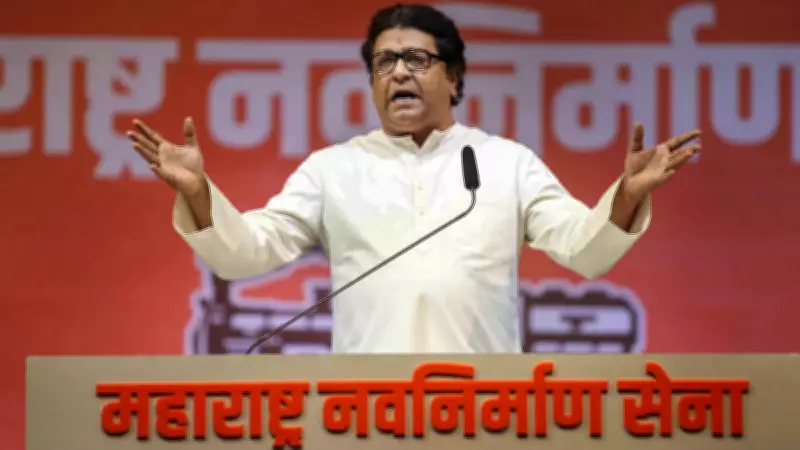
Raj Thackeray Voices Criticism of PM Modi's Foreign Policy on West Asia
In a significant political statement, Maharashtra Navnirman Sena (MNS) chief Raj Thackeray has openly criticized Prime Minister Narendra Modi's diplomatic stance regarding the ongoing conflict in West Asia. Thackeray's remarks have sparked considerable discussion within political circles, drawing attention to India's foreign policy dynamics in a volatile region.
Thackeray Highlights Iran's Historical Support for India
During his address, Raj Thackeray emphasized the longstanding relationship between India and Iran, pointing to specific instances of support. "Iran has consistently stood by us during challenging times, even on sensitive matters such as Jammu & Kashmir," Thackeray asserted. This statement underscores his view that Iran has been a reliable ally, particularly in international forums where India's position on Kashmir has faced scrutiny.
Thackeray's comments come amid heightened tensions in West Asia, where various geopolitical conflicts have drawn global attention. By invoking Iran's support, he aims to contrast what he perceives as a shift in India's foreign policy under the current administration. This criticism is notable as it touches upon both domestic and international political narratives, potentially influencing public opinion on India's diplomatic engagements.

Political Implications and Broader Context
The timing of Thackeray's statement is crucial, as it aligns with ongoing debates about India's role in global conflicts and its alliances. His remarks may be seen as an attempt to position himself as a vocal critic of the central government's foreign policy, especially in matters affecting India's strategic interests. This could resonate with certain voter segments who are concerned about international relations and national security.
Furthermore, Thackeray's focus on Jammu & Kashmir adds a domestic dimension to the discussion, linking it to broader issues of territorial integrity and foreign support. By praising Iran, he indirectly questions the effectiveness of Modi's approach to West Asia, suggesting that alternative diplomatic strategies might be more beneficial for India.
In summary, Raj Thackeray's critique of PM Modi's stand on the West Asia conflict highlights a growing discourse on India's foreign policy priorities. His emphasis on Iran's historical support serves as a reminder of the complex interplay between domestic politics and international diplomacy, shaping how political leaders navigate global challenges.