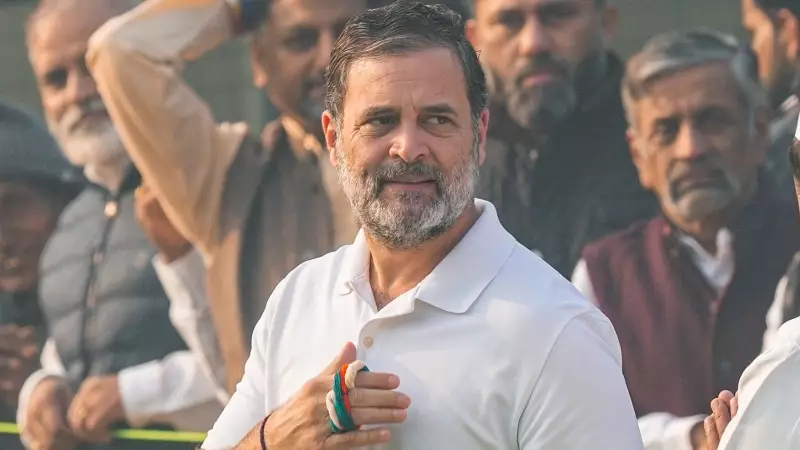
The political strategy of Congress leader and Leader of Opposition Rahul Gandhi, marked by a pronounced ideological tilt towards the Left, is facing a critical test of resonance with the Indian electorate. An examination of recent campaigns, particularly in Bihar, suggests a recurring disconnect between the issues championed by his team and the ground realities that shape voter behavior.
The JNU Bubble and the Reality of Indian Politics
The article draws a parallel between the ideological environment of Jawaharlal Nehru University (JNU) and the broader political landscape. While JNU is celebrated as a space for radical thought, the world beyond its gates operates on different principles. Ultra-Left ideas, though appealing to idealistic minds, often strike the general public as utopian and detached from everyday concerns. This inherent gap is cited as a key reason for the steady decline of the Left's political footprint in India.
Historically, leaders like Jawaharlal Nehru and Indira Gandhi, while ideologically inclined or strategically positioned left of centre, succeeded because they anchored their politics in the tangible anxieties and aspirations of the people. For Indira Gandhi, it was a tactical tool, not just a philosophical stance. The current challenge for Rahul Gandhi appears to be navigating this very balance.

Commitment vs. Campaign Missteps
There is no denying Rahul Gandhi's deepened political commitment in recent years. His Bharat Jodo Yatra, a long-distance foot march undertaken after crossing the age of 50, was a significant undertaking. Data from polling agency CVoter indicates it had a positive impact, with his approval rating rising from around 40% in June 2022 to 48% by January 2023 when the Yatra concluded.
This effort translated into tangible, though limited, electoral gains in the 2024 Lok Sabha elections. In the 71 seats covered by the Yatra, the Congress and its INDIA alliance partners saw an improved performance. However, subsequent campaigns have highlighted a strategic weakness.
The Bihar Example: Missing the Pulse on Unemployment
The recent Bihar elections serve as a stark case study. Despite CVoter's tracker showing that 68% of the public identified unemployment as their single biggest concern, Rahul Gandhi and his campaign chose to center their narrative on allegations of "vote theft." This issue, aggressively amplified by spokespersons and the party's IT cell, failed to generate significant traction with voters on the ground.
This was a puzzling strategic choice, especially when Tejashwi Yadav had demonstrated the potency of the unemployment issue in the 2021 Bihar Assembly elections. The decision to pivot away from the electorate's paramount worry underscores a critical flaw: the team's apparent struggle to accurately read the public mood and prioritize issues accordingly. Rahul Gandhi's Voter Adhikaar Yatra on the vote theft theme also did not meet the party's expectations.
In today's hyper-localized political arena, success hinges on precise identification of voter priorities. While sincerity is vital, clarity of focus and a team capable of gauging the public pulse with accuracy are what ultimately get rewarded at the ballot box. The lesson from history is clear: understanding people's daily lives must shape political messaging, not the other way around.